

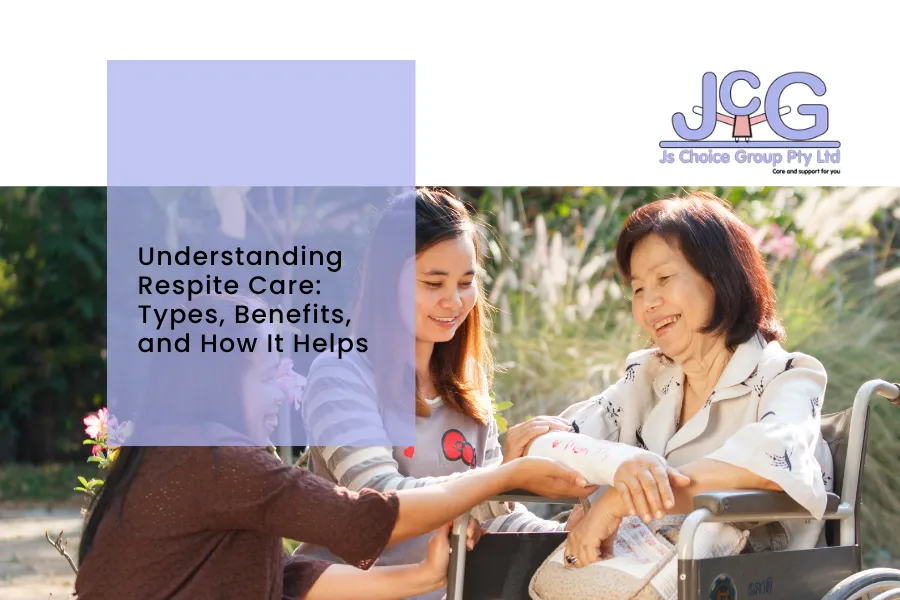
Introduction
Caring for a loved one with a disability is rewarding, but it's also demanding. Carers juggle daily responsibilities, medical appointments, and round-the-clock attention, often without a real break. Over time, this can lead to exhaustion, stress, and burnout. Respite care exists to give carers that much-needed pause, while ensuring participants continue receiving safe, quality support.
In this blog, we explain what respite care involves, the different types available, and why it matters for both carers and participants.
What Is Respite Care?
Respite care refers to short-term care provided to give primary carers a break from their caregiving responsibilities. It can range from a few hours of support to several weeks, depending on individual circumstances and needs. During this time, a trained support worker or care facility steps in to look after the participant, ensuring their routines, safety, and comfort are maintained.
The purpose of respite care goes beyond simply filling a gap. It allows carers to rest, attend to personal matters, manage their own health, or simply recharge, all of which contribute to sustainable, long-term caregiving. Without regular breaks, carers are at higher risk of burnout, which can affect both their wellbeing and the quality of care they're able to provide. Respite care protects this balance for everyone involved.
Types of Respite Care Available
Respite care comes in several forms; each suited to different situations and preferences.
In-Home Respite
Professional support is delivered directly in the participant's own home. This helps maintain familiar routines and comfort while the regular carer takes time away.
Short-Term Stays
Participants stay in safe, fully accessible accommodation for a few days or weeks. They receive full-time support from trained staff in a comfortable environment.
Overnight Care
Dedicated staff remain present throughout the night, ensuring safety and assistance whenever required. Carers get the chance to rest fully without worrying.
Emergency Respite
Immediate, short-term care is arranged when a carer becomes unavailable due to illness or unforeseen circumstances. Emergency respite care ensures support never lapses.
Planned Respite
Scheduled breaks are arranged well in advance, often used for holidays or medical procedures. This gives carers regular, predictable downtime to recharge.
Centre-Based Respite
Support is provided at a dedicated facility during the day, often combined with social or recreational activities. Participants stay engaged while their carer is away.
Host Family Respite
Care is provided by a trained host family in a warm, home-like setting. This offers a more personal, community-based experience than formal institutional care.
What Is Emergency Respite Care?
Emergency respite care is a specific type of respite designed for unplanned, urgent situations. This might include a carer falling ill, a family emergency, or any unexpected event that leaves a participant without their usual support. Unlike planned respite, which is arranged ahead of time, emergency respite needs to be deployed quickly to prevent any disruption to the participant's safety or wellbeing.
Providers offering emergency respite care typically have systems in place for rapid response, including 24/7 availability and pre-screened support workers ready to step in at short notice. This kind of support is crucial for protecting the continuity of care, particularly for participants who rely heavily on consistent routines and supervision.
Benefits of Respite Care
The advantages of respite care extend to carers, participants, and the broader family unit.
Carer Wellbeing
Regular breaks reduce stress, fatigue, and emotional exhaustion. Carers get the chance to maintain their own physical and mental health.
Participant Safety
Trained support workers ensure participants remain safe and well cared for. This holds true even when their usual carer is unavailable.
Routine Continuity
Quality respite care keeps daily routines as consistent as possible. This reduces anxiety or disruption for participants who rely on predictable schedules.
Stronger Relationships
Time apart can ease build-up tension and emotional strain. This often helps strengthen the relationship between carers and the people they support.
Professional Support
Participants gain access to trained, experienced workers who bring fresh perspectives and specialised skills. These new approaches often complement family care.
Peace of Mind
Carers can attend to personal matters or simply rest. They know their loved one is in safe, capable, and compassionate hands
How Emergency Respite Support Works
When urgent support is needed, a streamlined process helps ensure help arrives quickly.
Step 1: Contact the Provider
Call the support team directly to explain the situation. Most emergency respite services operate 24/7, so someone is always available to help.
Step 2: Quick Assessment
The team conducts a rapid assessment of the participants' needs and circumstances. They match them with a suitable caregiver or facility.
Step 3: Immediate Support
Qualified staff step in without delay, ensuring the participant's safety and comfort are addressed straight away. This minimises disruption during a stressful time.
Who Can Benefit from Respite Care?
Respite care isn't just for one type of situation. Many people across different circumstances can benefit from the situation.
Full-Time Carers
Those providing daily, hands-on care often need scheduled breaks to avoid long-term burnout. This helps them continue providing quality care sustainably.
Ageing Parents
Parents caring for adult children with disabilities may need additional support over time. Their own health, mobility, or energy levels often change with age.
Working Carers
Carers balancing employment alongside caregiving responsibilities often rely on respite to manage both effectively. This reduces stress and prevents burnout.
Families in Crisis
Sudden illness, hospitalisation, or unexpected family emergencies often create an urgent need for short-term care. Emergency respite proves especially valuable here.
Multi-Person Households
Families caring for more than one person with additional needs may require more frequent support. Flexible respite helps manage overlapping responsibilities.
NDIS Participants
Participants benefit from social variety, new environments, and professional support during respite stays. Many enjoy the change of routine and social interaction.
Sole Carers
Individuals without a support network often need to respite the most. They have no one else to share caregiving responsibilities or provide backup.
Why Choose JS Choice for Respite Care
Choosing the right provider matters, especially during stressful or urgent situations.
Rapid Response
We understand that emergencies can't wait. Our team is ready to deploy support quickly whenever it's needed most, day or night.
Qualified Professionals
All our support workers are screened, trained, and experienced. They handle complex care needs across a wide range of disabilities and circumstances.
Flexible Options
From a few hours to several weeks, we offer flexible respite packages. These are tailored to your specific situation and preferences.
Peace of Mind
Rest easy knowing your loved one is in safe, compassionate hands. You can take care of other personal or family matters.
Conclusion
Respite care plays a vital role in supporting both carers and the people they care for. Whether it's a planned break or emergency respite care during an unexpected crisis, the right support ensures safety, continuity, and peace of mind for the whole family. If you or someone you know could benefit from respite support, reach out to JS Choice today.