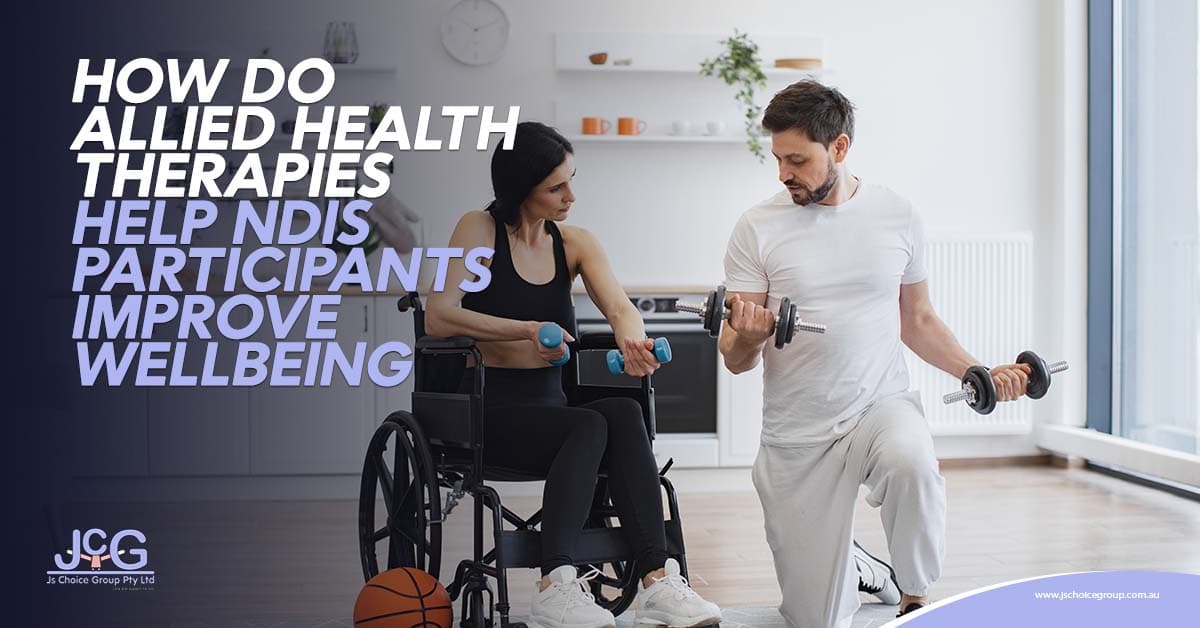
For NDIS participants, Wellbeing is about having the energy, the skills, and the support to live life on their own terms.
Allied health therapies NDIS participants can access through their plan are one of the most powerful tools for making that happen. They work on the whole person: physical function, communication, emotional regulation, independence, and quality of life.
This post explains exactly how allied health therapies NDIS plans fund contribute to wellbeing, which therapy types make the biggest difference, and why the link between therapy and daily support is so important for lasting outcomes.
What Role Do Allied Health Therapies Play in the NDIS?
Allied health therapies NDIS funding covers are delivered by qualified professionals who specialise in specific areas of health and human function. Unlike general medical care, allied health is focused on function, skills, and quality of life rather than diagnosis and treatment alone.
Under the NDIS, allied health therapies are funded through the Capacity Building budget, specifically under Improved Daily Living Skills (Support Category 15). You can review the full list of support categories on the NDIS website.
Allied health therapies NDIS plans fund are designed to build capability over time, not just manage a condition from week to week.
How Allied Health Therapies Support Physical Wellbeing
For many NDIS participants, physical wellbeing is directly tied to the quality of their allied health support. The body's ability to move, function, and stay safe in daily life depends on regular, targeted therapy from trained professionals.
Physiotherapy and Movement
Physiotherapy is one of the most widely accessed allied health therapies NDIS participants use to maintain and improve physical function. Physiotherapists work on strength, mobility, balance, pain management, and injury prevention.
For participants with physical disabilities, neurological conditions, or chronic illness, regular physiotherapy can slow functional decline, restore movement after setbacks, and reduce the risk of secondary complications. The physical gains from consistent therapy often translate directly into greater independence at home and in the community.
Occupational Therapy and Safe Function
Occupational therapy (OT) takes a broader view of physical wellbeing. An OT assesses how a participant is managing daily tasks and identifies where physical barriers, environmental factors, or functional limitations are getting in the way.
They can recommend changes to the home environment, prescribe assistive technology, and work with participants on the practical skills needed for independent living. For someone with a physical disability, an OT assessment can be the starting point for a series of changes that significantly improve safety, comfort, and capability at home.
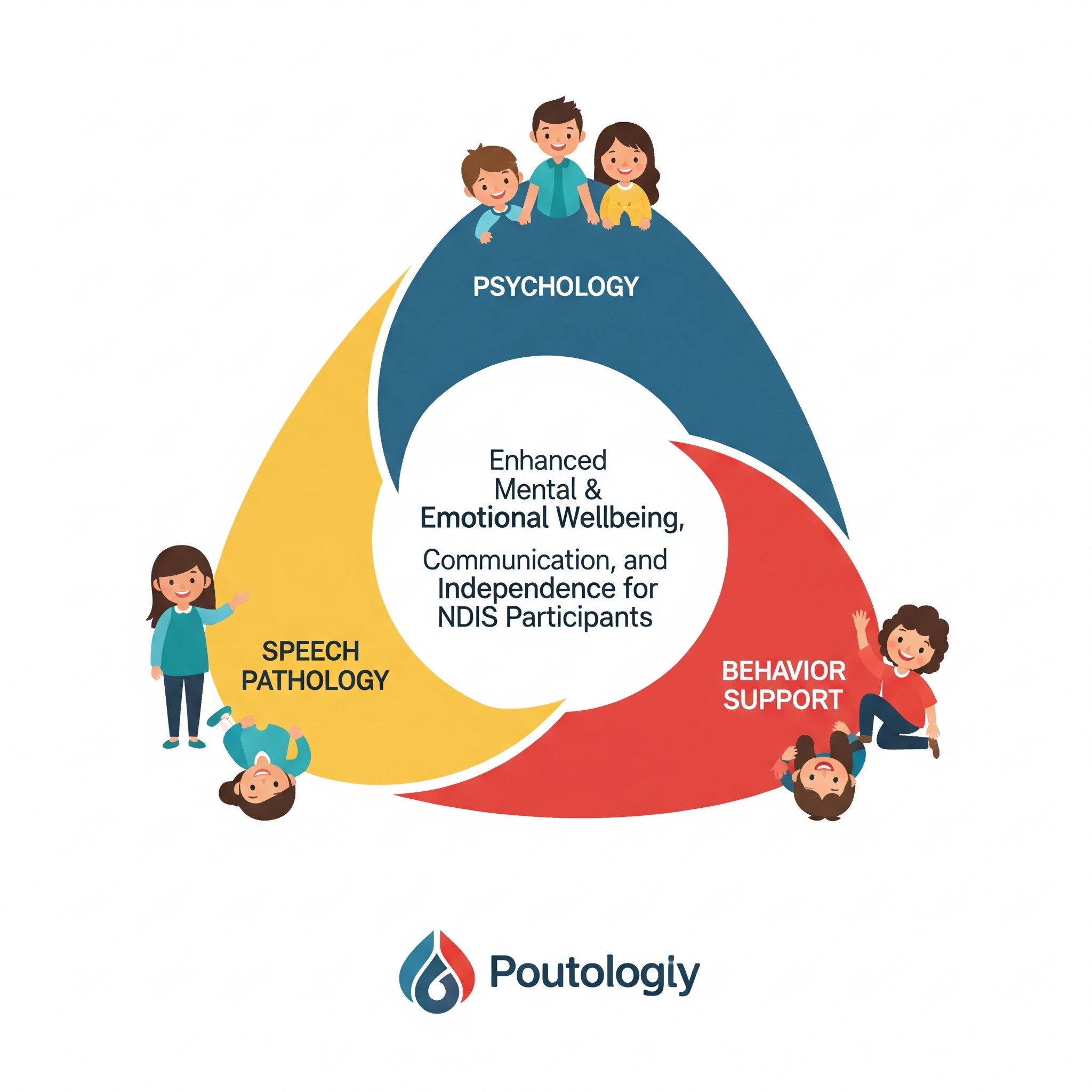
How Allied Health Therapies Support Mental and Emotional Wellbeing
Allied health therapies NDIS participants access are not only about the body. For many people, the most significant wellbeing gains come from therapy that addresses mental health, emotional regulation, and communication.
Psychology and Emotional Regulation
Psychology services help participants understand and manage their thoughts, feelings, and behaviours. For participants living with anxiety, depression, trauma, or psychosocial disability, psychology is often a foundational part of their NDIS plan.
A psychologist works with participants to develop coping strategies, build resilience, process difficult experiences, and set goals for their recovery and wellbeing.
Over time, psychological support helps participants feel more in control of their lives, which has a ripple effect across every other area of daily functioning.
Speech Pathology and Connection
Communication is central to wellbeing. When a person cannot express their needs, participate in conversation, or connect with the people around them, it has a profound effect on their mental and emotional health.
Speech pathology supports participants to build communication skills, whether verbal, written, or through augmentative and alternative communication (AAC) tools.
For participants with autism, acquired brain injury, or intellectual disability, speech pathology can unlock new levels of connection, self-advocacy, and participation in daily life.
Behaviour Support
Positive behaviour support is a specialised form of allied health that focuses on understanding why certain behaviours occur and developing strategies that improve quality of life. It is about working with the participant to reduce distress and build a life with fewer barriers.
For participants and their families, effective behaviour support can transform daily life at home, in education, and in the community. It is one of the allied health therapies NDIS participants with complex support needs rely on most.
The Role of Allied Health in Building Independence
One of the core purposes of allied health therapies NDIS funding covers is building participant independence over time. This is not just a principle. It is the standard against which therapy effectiveness is measured in NDIS plan reviews.
Every therapy goal is linked to a broader NDIS goal, and those goals are almost always about doing more, connecting more, and relying less on others for tasks a person wants to manage themselves.
Allied health therapies work toward this by teaching skills, removing barriers, and building the participant's own capacity to navigate their life. This might look like an OT working with a young adult on cooking skills so they can live more independently.
Or a physiotherapist supporting a participant to transfer safely between a wheelchair and a bed without assistance.
Or a speech pathologist helping a participant develop the communication skills to advocate for themselves in a plan meeting.
The outcomes are real, practical, and life-changing. And they compound over time when therapy is consistent and well-supported.
How Allied Health and Everyday Support Work Together
Here is something that does not get discussed enough. The allied health therapies NDIS participants access in clinic sessions are only as effective as the environment those participants return to afterwards.
A therapy session might last 45 minutes. The rest of the participant's week happens at home, in the community, and with the people around them. If the strategies developed in therapy are not being reinforced in daily life, progress slows down significantly.
This is the connection that makes the combination of allied health and good daily support so powerful.
A JS Choice support worker who understands a participant's therapy goals can help them practise skills in real situations, maintain routines developed by their OT, and apply communication strategies worked on with their speech pathologist.
We encourage our support team to communicate with participants' therapists and stay informed about current goals and strategies. It is not therapy. It is therapy implementation, and it makes an enormous difference to outcomes.
If you want to understand how therapeutic supports fit into the NDIS framework, our guide to therapeutic supports in the NDIS covers the full picture.
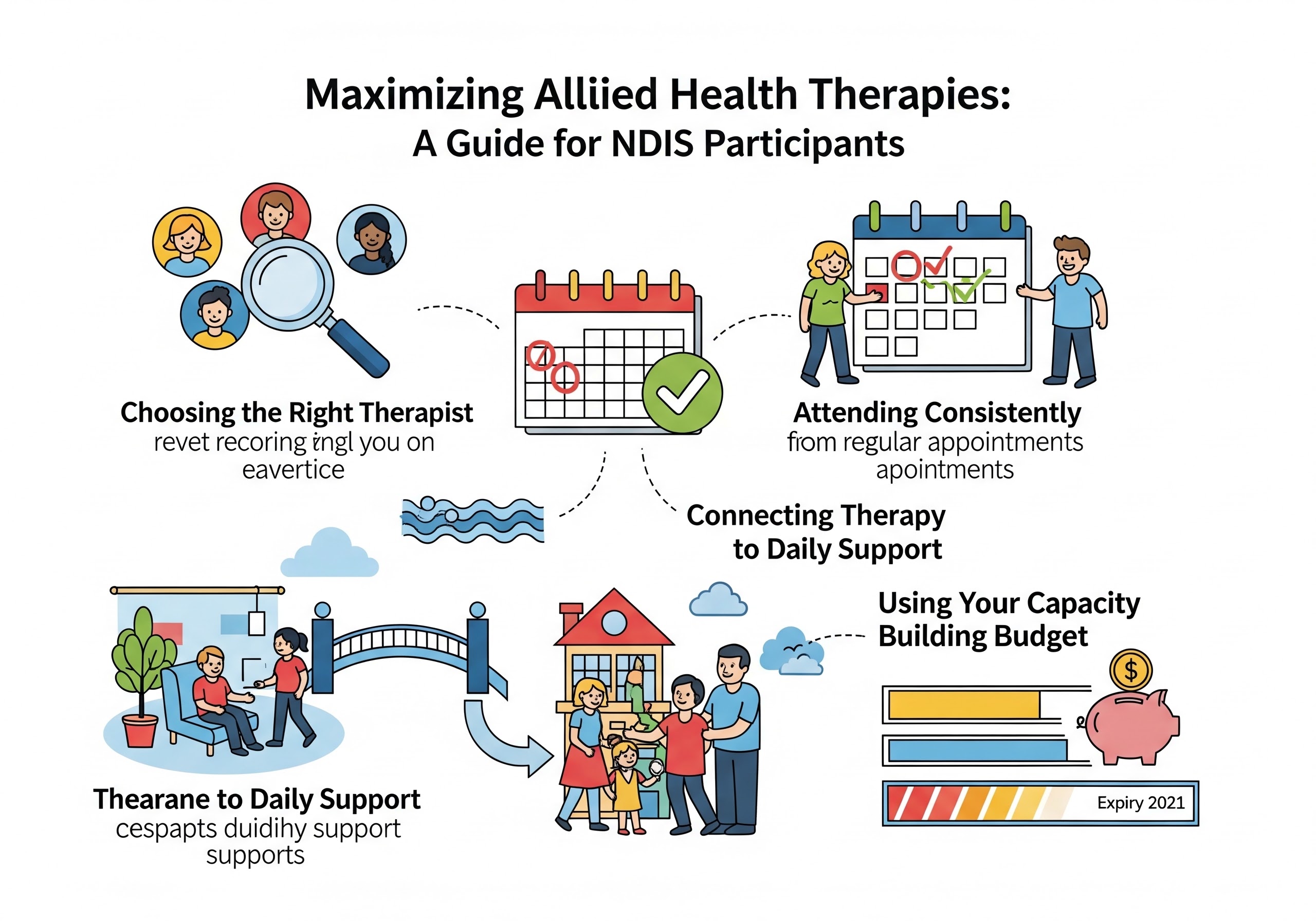
Getting the Most from Allied Health Therapies in Your NDIS Plan
Not every participant gets the maximum benefit from their allied health funding. Here are the most common reasons therapy does not deliver the outcomes it should, and what to do about each one.
Choosing the right therapist for your needs and personality Allied health is a relationship.
When it comes to allied health therapies NDIS participants access, the fit between person and therapist matters enormously. If sessions do not feel productive or safe, it is worth exploring other providers. Most NDIS participants can change therapists without needing a new plan.
Attending consistently The allied health therapies NDIS funds work best when attended regularly. Irregular sessions mean starting over each time rather than building on previous progress. Work with your therapist to find a schedule that fits your life and commit to it.
Connecting therapy to daily support As discussed above, therapy outcomes improve significantly when daily support workers understand and reinforce therapy goals. Share your therapy plans with your support team and provider.
Using your Capacity Building budget before it expires Capacity Building funding does not roll over between plan periods. Review your budget partway through your plan to make sure you are on track to use your therapy funding effectively.
Your Support Coordinator can help you manage this.
How JS Choice Group Can Help?
At JS Choice, we understand that the allied health therapies NDIS participants access are most effective when paired with strong, consistent daily support. Our team works closely with participants' allied health providers to ensure that therapy goals are reinforced between sessions.
Our allied health and therapy implementation services are available across Point Cook, Tarneit, Werribee, Hoppers Crossing, Laverton, Craigieburn, Footscray, and Melbourne's wider western and northern suburbs.
If you are ready to find out how we can support your allied health journey, get in touch today.
Related reading: