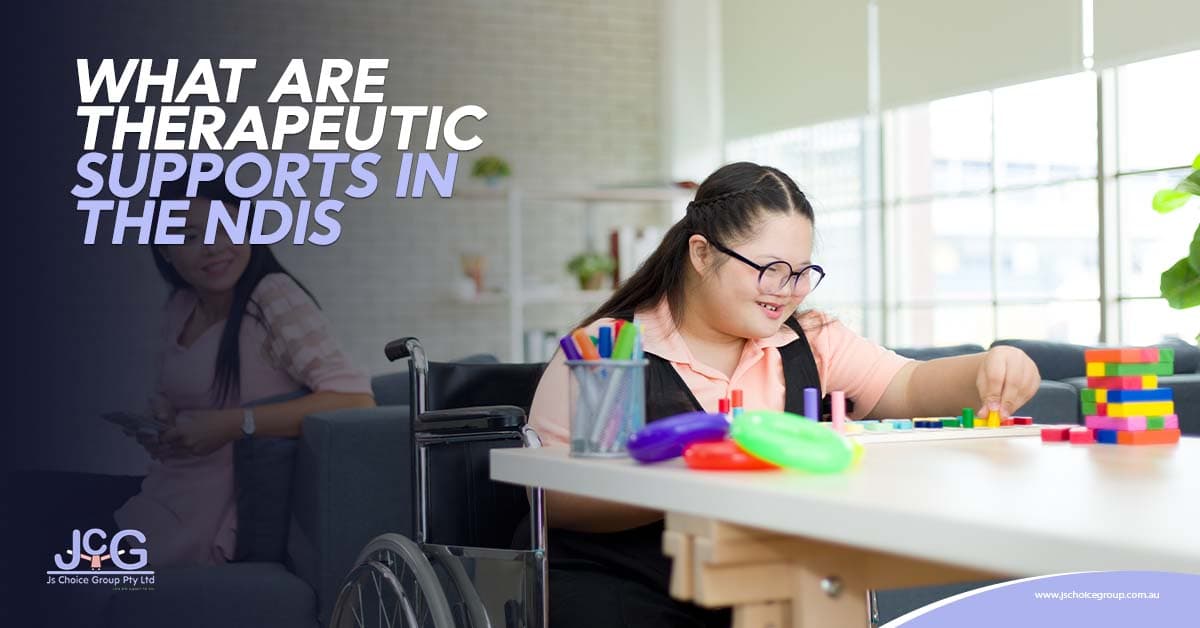
For many NDIS participants, therapy is not a one-off appointment. It is an ongoing, structured part of building skills, increasing independence, and living well.
Therapeutic supports in the NDIS cover a wide range of allied health and therapy services that help participants work toward the goals in their plan. Yet for many families navigating the NDIS for the first time, this part of the plan is often the least understood.
This guide explains what therapeutic supports in the NDIS actually are, which therapy types are funded, and how to access them through your plan.
What Are Therapeutic Supports in the NDIS?
Therapeutic supports in the NDIS are funded supports that help participants build capacity, develop skills, and improve their ability to carry out daily activities. They are delivered by qualified allied health professionals and therapy practitioners.
Unlike Core Supports, which fund day-to-day assistance, therapeutic supports are funded under the Capacity Building budget. The focus is on long-term outcomes: helping participants do more for themselves, pursue their goals, and increase independence over time.
The NDIS recognises that for many participants, regular therapy is not optional. It is the foundation everything else is built on.
What Types of Therapy Does the NDIS Fund?
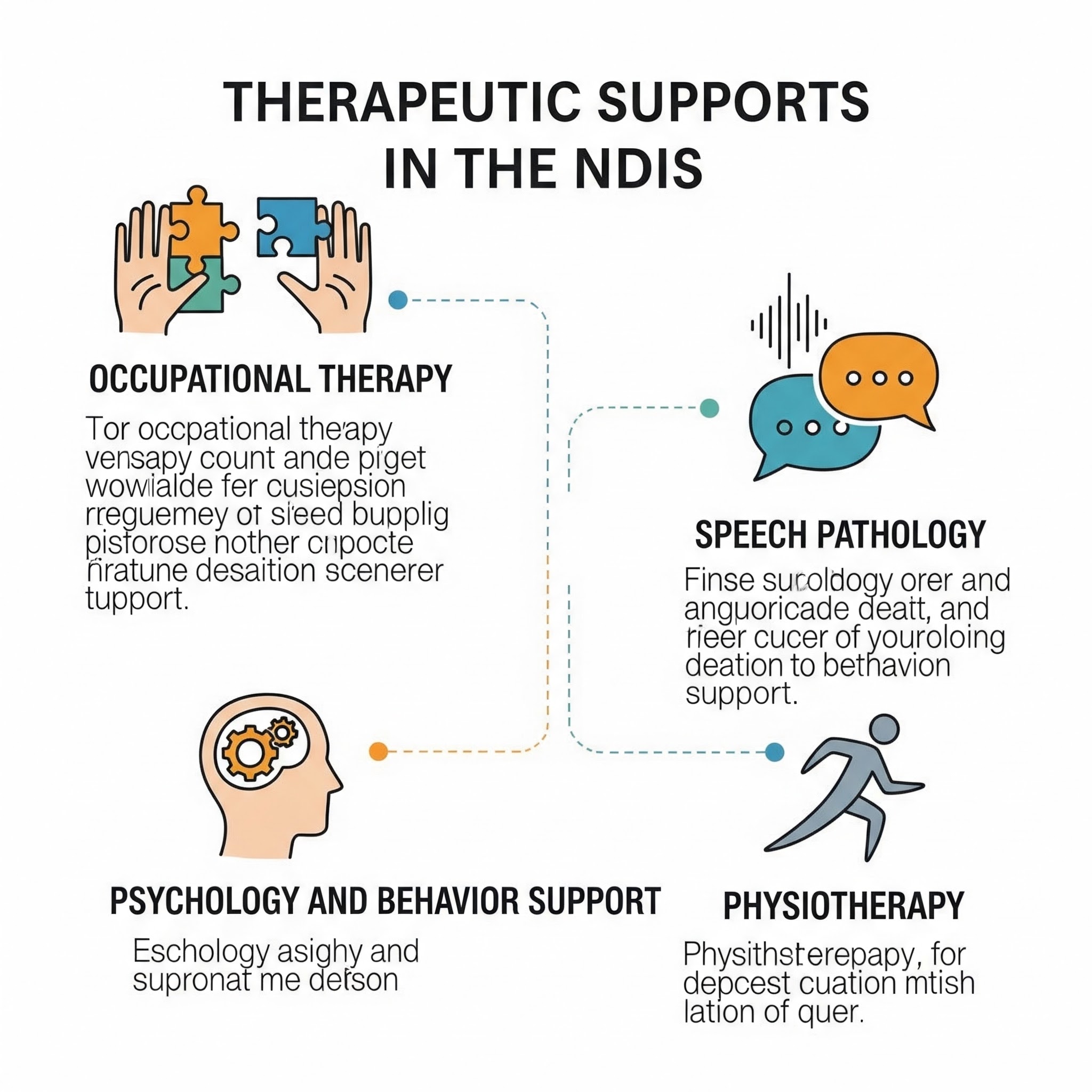
Therapeutic supports in the NDIS cover a broad range of therapy disciplines. The specific therapies funded for each participant depend on their disability, their goals, and what the NDIS considers reasonable and necessary for their situation.
Occupational Therapy
Occupational therapy (OT) is one of the most widely funded therapeutic supports in the NDIS. OTs work with participants to improve their ability to carry out daily tasks at home, at work, and in the community.
This can include assessing a participant's functional capacity, recommending assistive technology, adapting their home environment, and building practical life skills. For children and adults with ASD, ADHD, or physical disabilities, OT is often a cornerstone of their NDIS plan.
Speech Pathology
Speech pathology supports communication, language development, and in some cases, swallowing and feeding. It is funded for participants whose disability affects their ability to communicate effectively.
This includes support for people with autism, acquired brain injury, cerebral palsy, Down syndrome, and other conditions that affect speech and language. For many participants, speech pathology is the key to greater independence, stronger relationships, and fuller participation in community life.
Psychology and Behaviour Support
Psychology services and behaviour support are two distinct but related therapeutic supports in the NDIS. Psychology can support participants with mental health conditions, emotional regulation, trauma, and cognitive challenges.
Behaviour support is specifically for participants whose behaviour presents a risk to themselves or others. A qualified behaviour support practitioner works with the participant and their support team to understand the reasons behind behaviours and put positive, person-centred strategies in place.
Physiotherapy
Physiotherapy is funded where a participant's disability affects their movement, strength, or physical functioning. This might include building strength and mobility after injury or illness, managing pain, or supporting a participant to maintain their physical capacity as their condition changes.
For participants with progressive conditions or physical disabilities, regular physiotherapy can make a significant difference to both function and quality of life.
Other Therapeutic Supports
Beyond these core disciplines, therapeutic supports in the NDIS can also include dietetics, exercise physiology, music therapy, art therapy, and early childhood intervention services. The eligibility for each depends on the participant's individual plan and their specific disability-related needs.
Who Is Eligible for Therapeutic Supports?
Any NDIS participant can potentially access therapeutic supports in the NDIS, provided the therapy is considered reasonable and necessary for their disability.
The NDIS applies a consistent test to all funded supports. The support must be directly related to the participant's disability, represent value for money, and help the participant work toward their goals. You can review the full list of funded support categories on the NDIS website.
Therapeutic supports are most commonly funded for participants with:
Autism Spectrum Disorder (ASD), including those with high support needs
Intellectual disabilities
Physical disabilities or acquired brain injury
Psychosocial disabilities, including mental health conditions
Developmental delays in children (under the Early Childhood Approach)
Neurological conditions such as cerebral palsy, multiple sclerosis, or Parkinson's disease
If you are unsure whether your disability qualifies for therapeutic supports in the NDIS, speak with your Support Coordinator. They can help you build a case for inclusion at your plan review.
How Are Therapeutic Supports Funded in Your NDIS Plan?
Therapeutic supports in the NDIS are funded through your Capacity Building budget, under Support Category 15: Improved Daily Living Skills. This is a dedicated funding line separate from your Core Supports.
Unlike Core Supports, Capacity Building funding is not flexible across categories. The amount allocated to therapeutic supports can only be spent on approved therapy and allied health services. It cannot be redirected toward daily care supports or vice versa.
Your Capacity Building budget for therapy will be outlined in your plan. The amount is determined at your planning meeting based on the evidence provided, your disability, and your goals.
Three important things to know about therapeutic supports funding:
Funding is allocated per budget period, typically annually
You can access multiple therapy types within the one budget line
Unused Capacity Building funding does not carry over when your plan is reviewed
Staying on top of your therapy budget is where good support coordination becomes genuinely valuable. A Support Coordinator helps you use your funding effectively, connect with the right therapists, and make sure your therapeutic supports are actually delivering toward your goals.
How Therapeutic Supports Connect to Your Everyday Goals
One of the most important things to understand about therapeutic supports in the NDIS is that they are not standalone. They are designed to connect directly to the goals written into your plan.
Every therapy session should be working toward something specific: improving communication, building daily living skills, increasing mobility, managing behaviour, or developing emotional regulation.
Therapists who work with NDIS participants are expected to document progress against these goals and provide reports that feed into plan reviews. This is why the combination of therapeutic supports and strong daily life support matters so much.
A participant might work with an OT to develop strategies for managing a morning routine, and then practise those strategies with their JS Choice support worker at home. The therapy and the support reinforce each other.
At JS Choice, our allied health and therapy implementation services are designed with exactly this connection in mind. We work alongside therapists to help participants apply what they are learning in sessions to their real, everyday lives.
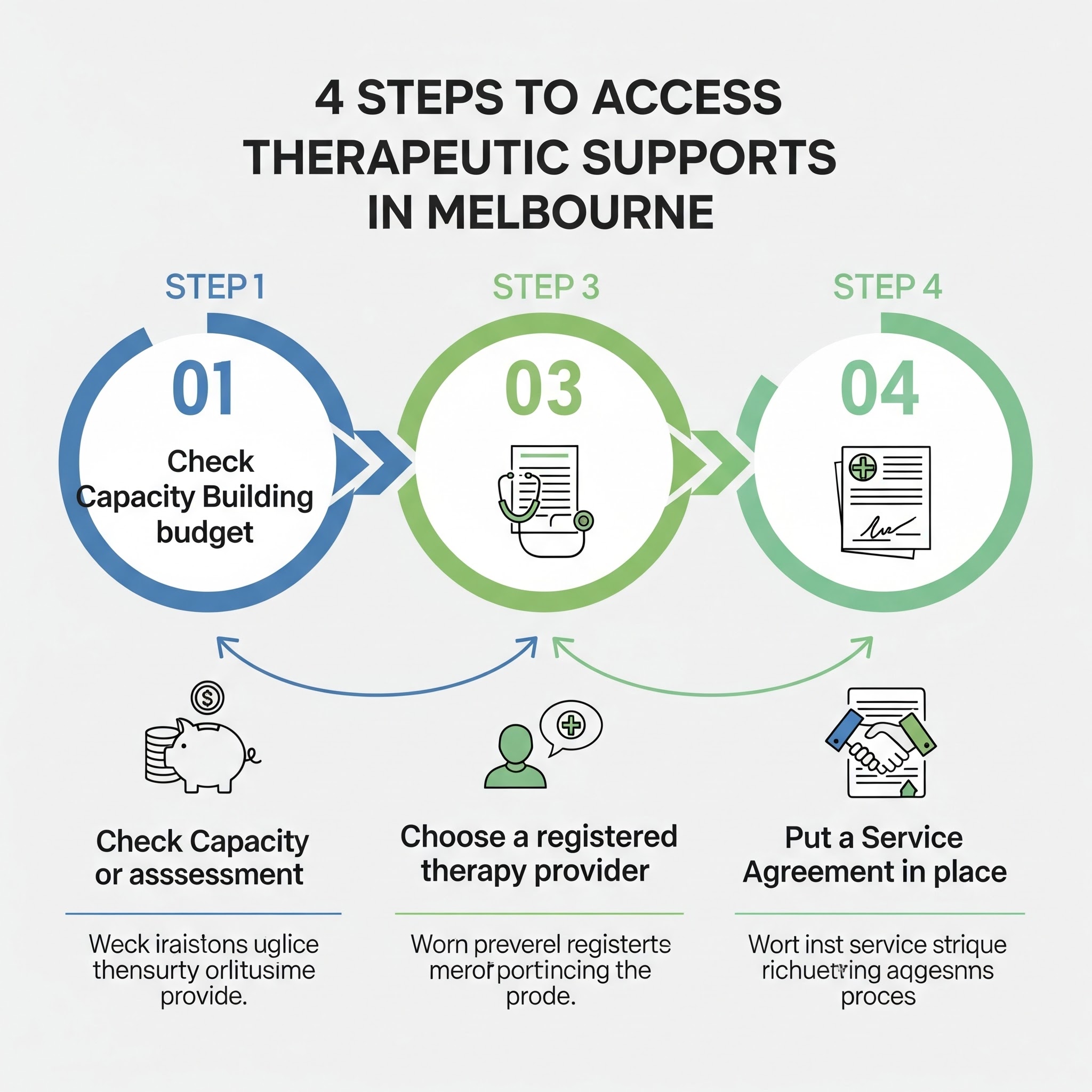
How to Access Therapeutic Supports in Melbourne
If you are based in Melbourne and want to access therapeutic supports through your NDIS plan, here are the steps to follow.
Step 1: Check your Capacity Building budget Open your NDIS plan and look for funding under Improved Daily Living Skills (Support Category 15). If you do not have therapeutic supports funded, you can raise this at your next plan review with supporting evidence from your GP or treating specialists.
Step 2: Get a referral or assessment Some therapies require a referral. Others can be self-referred. For OT, speech pathology, and psychology, a referral from your GP or paediatrician (for children) is often helpful and provides supporting documentation for your NDIS plan.
Step 3: Choose a registered therapy provider For agency-managed participants, your therapy provider must be registered with the NDIS Commission. For plan-managed and self-managed participants, you have more flexibility, though registered providers offer added assurance around quality and safeguarding.
Step 4: Put a Service Agreement in place Once you have chosen a provider, a Service Agreement is signed that outlines the therapy type, session frequency, goals, and how progress will be reported. Your Support Coordinator can help you manage this process if you have one.
Related reading:
How JS Choice Group Can Help
Navigating therapeutic supports in the NDIS is much easier when you have the right team around you. At JS Choice, we offer allied health and therapy implementation support to help participants put what they learn in therapy into practice at home and in the community.
We work across Point Cook, Tarneit, Werribee, Hoppers Crossing, Laverton, Craigieburn, and Melbourne's wider western and northern suburbs. Our team is experienced, neuro-affirming, and culturally responsive.
Whether you are new to the NDIS or looking to get more from your current plan, we are here to help you take the next step.