
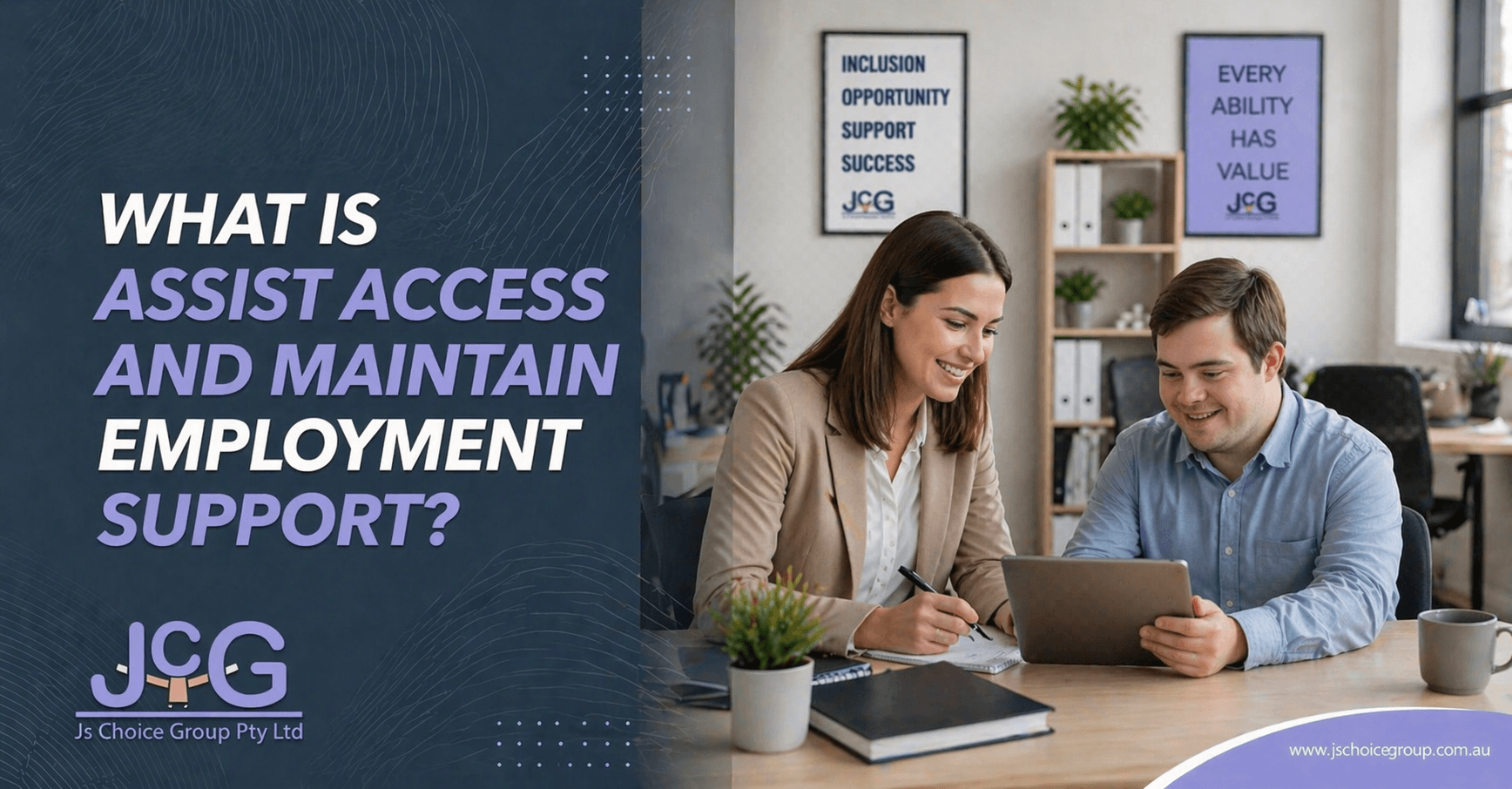
Assist Access and Maintain Employment is an NDIS-funded support designed to help participants with disability enter the workforce and achieve long-term job stability. This service provides specialized assistance with career planning, resume building, and job searching, as well as ongoing on-the-job coaching once a role is secured.
By addressing unique barriers to employment, this support ensures participants can thrive in a professional environment and build a sustainable career. Under the NDIS, participants can access this support through their Capacity Building budget, specifically within the "Finding and Keeping a Job" category.
Unlike standard employment programs, this service offers intensive, person-centered guidance that adapts to your individual strengths and workplace needs. Whether you are a school leaver or looking to re-enter the workforce, this support provides the foundation needed for economic independence and community participation.
How Assist Access and Maintain Employment Support Works?
In professional disability support, the focus is on creating a roadmap that bridges the gap between your current skills and your vocational goals. Support providers typically help by identifying your unique strengths and matching them to industries where you can excel.
A well-managed employment support plan ensures that you aren't just placed in any role, but in one that aligns with your specific aspirations. NDIS plans often include funding for this service to ensure you have a dedicated partner to navigate the complexities of the Australian job market.
Key Phases of the Support Process
Career Exploration: Identifying your interests and matching your skills to suitable industries through vocational assessments.
Job Readiness: Developing essential foundation skills such as professional communication, time management, and workplace etiquette.
The Job Hunt: Practical assistance with crafting resumes, writing cover letters, and practicing for interviews.
Post-Placement Support: Ongoing mentoring at your new workplace to help you settle into the team and manage your duties.
Core Services Included in This Program
The scope of Assist Access and Maintain Employment is broad, covering both the preparation phase and the actual maintenance of your job.
1. Pre-Employment Skill Building
Participants can learn how to navigate public transport to get to work on time or how to handle workplace stressors. This capacity building is vital for long-term success and is often paired with NDIS development and life skills programs to ensure a holistic approach to independence.
2. Workplace Modifications and Adjustments
Support providers typically help coordinate with employers to implement "reasonable adjustments". This might include specialized software, ergonomic workstation setups, or modified hardware that makes your job tasks easier to perform.
3. On-the-Job Support and Coaching
Once you have started your role, a support worker can provide on-site coaching. They act as a bridge between you and your employer, ensuring communication remains clear and helping you master new technical skills as the role evolves.
Expert Note: If you require physical assistance during your working hours, such as help with medications or hygiene, this can be coordinated through NDIS personal care services to ensure you remain healthy and focused while at work.
Comparing NDIS Employment Support and DES
It is important to understand that NDIS employment support is different from the mainstream Disability Employment Services (DES) provided by the government.
Feature | NDIS Employment Support | Disability Employment Services (DES) |
Primary Focus | Intensive capacity building and long-term on-the-job support. | Job placement and short-to-medium-term workplace assistance. |
Funding Source | Your individual NDIS Capacity Building budget. | Separate Australian Government funding. |
Support Level | High-intensity; can include personal care at work. | Lower-intensity; focused primarily on open market roles. |
Many participants use both services simultaneously: the NDIS for deep skill development and personal care, and DES for broad job placement assistance.
Eligibility and Getting Started
To access this support, you must have an employment goal listed in your NDIS plan. If your current plan doesn't mention work, you can discuss adding an employment goal during your next plan reassessment meeting.
Clients typically expect their support team to provide evidence-based recommendations. To justify this funding, you might need a letter from your doctor or a report from an Occupational Therapist explaining how specialized employment support will help you overcome barriers caused by your disability.
Frequently Asked Questions
Who is eligible for NDIS in Australia?
To be eligible for the NDIS, you must be under 65 years of age, live in Australia as a citizen or permanent resident, and have a permanent and significant disability that affects your ability to take part in everyday activities.
Can NDIS help me if I already have a job?
Yes. If you are struggling in your current role because of your disability, the "Maintain Employment" part of this support can provide job coaching or workplace modifications to help you stay in the role.
What is the difference between SLES and this support?
School Leaver Employment Supports (SLES) is a specialized program for students in their final year of school or recently graduated, helping them transition into work. Assist Access and Maintain Employment is a broader service available to participants of all ages throughout their careers.
Conclusion
Finding a job that respects your abilities and challenges you to grow is a major step toward a fulfilling life. By utilizing Assist Access and Maintain Employment support, you secure a professional safety net that allows you to focus on your performance and career growth.
If you are exploring NDIS support options, understanding your plan and available services can help you make informed decisions for your care and independence. Whether you are taking your first step into a workplace or looking to advance in your current career, the right support can make all the difference. For participants requiring clinical oversight to maintain their health during work, exploring NDIS community nursing care can provide the additional professional support needed to stay safe and productive.