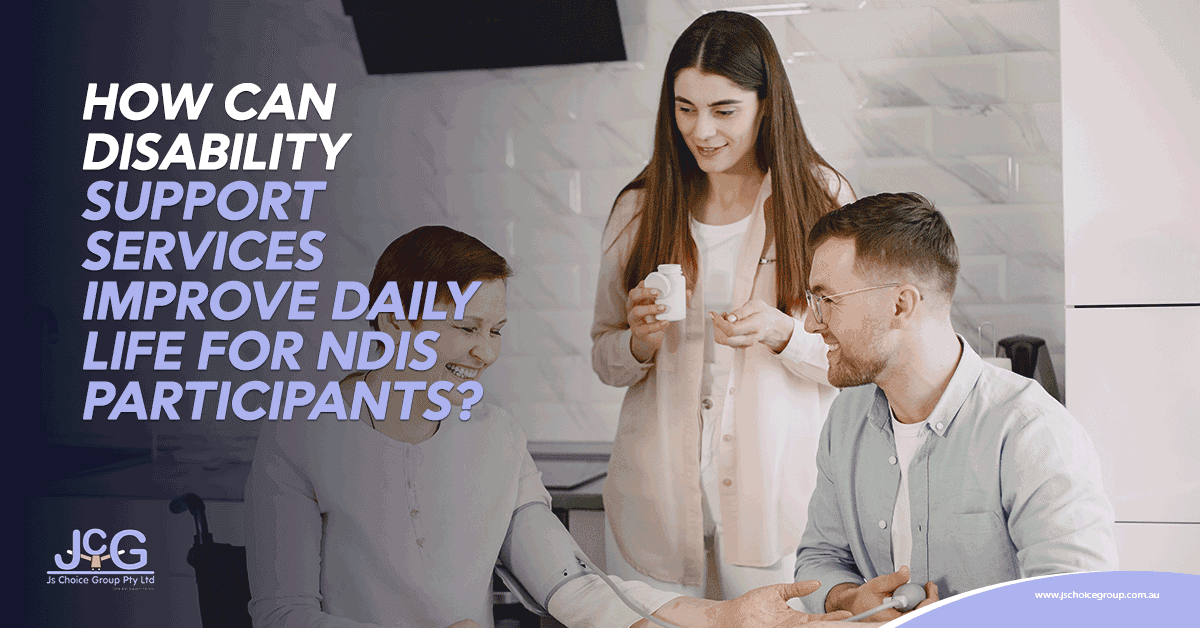
For many Australians living with disability, daily life presents challenges that others rarely think about. Getting dressed in the morning. Preparing a meal. Catching a bus. Joining a social group. These everyday moments, the ones most people take for granted, can require significant effort, planning, and support for someone with a physical, cognitive, neurological, or psychosocial disability.
This is exactly where disability support services make a difference. Not by doing everything for a participant, but by providing the right level of assistance, skill-building, and encouragement at the right moments, enabling individuals to live with greater confidence, comfort, and control.
This guide explores the specific ways disability support services funded through the NDIS can transform daily life for participants in Melbourne and across Australia.
What Does "Improving Daily Life" Actually Mean?
It is easy to talk about improving quality of life in abstract terms. But for NDIS participants, improvement is measured in concrete, personal milestones:
Being able to prepare your own breakfast for the first time
Attending a community group independently after months of supported practice
Managing a medical appointment without a family member having to take time off work
Waking up in your own home, supported, rather than in a residential facility
Feeling genuinely heard and respected by the people who support you
The NDIS was built on the recognition that disability support is not a cost to be minimised, it is an investment in a person's ability to participate fully in life. The NDIS provides funding to eligible people with disabilities to gain more time with family and friends, greater independence, access to new skills, jobs, or volunteering in their community, and an improved quality of life.
The key word in that statement is investment. The right disability support services do not just maintain a participant's current situation, they actively build toward a better one.
1. Personal Care Support: Dignity at the Foundation
Every person deserves to start their day with dignity. For participants who need assistance with personal care, showering, grooming, dressing, toileting, or managing continence, disability support services provide trained, respectful workers who understand both the practical and deeply personal nature of this kind of help.
Quality personal care support does three important things:
It preserves dignity. A skilled support worker approaches personal care with sensitivity, patience, and respect for the participant's preferences, routines, and privacy. This is not just about the task, it is about how a person feels about themselves at the start of each day.
It maintains health. Consistent personal care prevents skin infections, pressure injuries, and hygiene-related health issues that can lead to hospitalisation or the need for more intensive clinical intervention.
It creates the conditions for everything else. When a participant begins their day feeling clean, comfortable, and cared for, they are in a far stronger position to engage with the rest of their supports, therapy, community activities, employment, social connection.
JS Choice Group's assistance with daily life delivers personal care with a genuine commitment to participant dignity, treating every morning routine as an opportunity to set the tone for a good day.
2. Household Support: A Home That Feels Like One
Home is where most of daily life happens. For participants who find household tasks difficult or impossible to manage independently, due to physical limitations, fatigue, cognitive challenges, or mental health conditions, a cluttered, unclean, or disorganised home quickly becomes a source of stress rather than comfort.
Disability support services include assistance with:
Cleaning and household tidying — Maintaining a safe, hygienic, and comfortable living environment
Laundry and linen management — Keeping clothes and bedding clean and accessible
Meal preparation and grocery management — Cooking nutritious meals and managing food supplies
Minor home maintenance — Replacing light bulbs, managing basic repairs, and ensuring the home remains safe
Beyond the practical benefits, household support has a profound effect on mental wellbeing. People want to feel heard. They want those support workers for them who would know their name, their daily routine, and their preferences. A support worker who understands a participant's home, habits, and preferences delivers far more than a cleaning service, they provide consistency, reliability, and a sense that someone genuinely cares about the participant's environment and comfort.
Crucially, skilled providers use household support as a skills-building opportunity. Rather than simply doing the cooking, a support worker might cook alongside a participant, teaching techniques, building confidence, and gradually stepping back as the participant's abilities grow.
3. Building Daily Living Skills: Moving From Assisted to Independent
One of the most powerful, and most underutilised, aspects of the NDIS is its investment in skills development. The development of daily living for disabled participants focuses on teaching practical skills that help individuals manage everyday tasks confidently. These programs aim to improve independence while supporting long-term wellbeing.
Disability support services help participants develop a wide range of daily living skills, including:
Cooking and nutrition — Planning meals, shopping on a budget, preparing food safely
Financial management — Budgeting, paying bills, understanding bank statements
Time management and planning — Using calendars, setting routines, managing appointments
Communication skills — Expressing needs and preferences clearly, navigating social situations
Self-advocacy — Understanding rights, speaking up in health and service settings
Public transport training — Learning bus and train routes, using ticketing systems, navigating stations independently
These programs focus on learning through practice rather than passive assistance. Within the NDIS, development of daily living skills is typically funded through Capacity Building Supports. These supports help participants increase independence and achieve personal goals.
The difference between receiving care and building skills is significant. A participant who has learned to prepare simple meals independently has gained something that belongs to them permanently, a capability that no plan review can take away.
4. Therapy and Allied Health: Building Capability From the Inside Out
For many participants, the most important improvements to daily life happen in a therapy room, long before those changes are visible in everyday functioning. Allied health services funded by the NDIS target the underlying capabilities that daily independence depends on.
Occupational therapy is particularly impactful for daily life improvement. An OT assesses how a participant's disability affects their ability to perform everyday tasks, then develops strategies, adaptive equipment recommendations, and home modification plans to address those barriers directly. Something as simple as the right adaptive utensils can mean the difference between needing help to eat every meal and eating independently.
Physiotherapy addresses the physical foundations of daily life, strength, balance, mobility, and pain management. Participants who work with physiotherapists regularly often see measurable improvements in their ability to move safely around their home, manage fatigue, and participate in community activities.
Speech pathology improves communication, the single most important skill in navigating daily life. Whether supporting a participant with autism to develop functional communication strategies, or helping a stroke survivor regain clear speech, this work directly expands a participant's ability to express their needs and connect with others.
Psychology addresses the emotional and cognitive dimensions of daily life, anxiety, depression, trauma, executive function, and behavioural regulation, that often present as significant barriers to independence.
JS Choice Group's allied health services are built on an integration model: therapy goals are translated directly into everyday support routines, so participants experience the benefits of clinical work in their real daily lives, not just in a clinic.
5. Community Access: Connection as a Foundation for Wellbeing
Human beings are social creatures. For participants who face barriers to community participation, whether physical, communicative, or social, isolation is not just unpleasant. It is genuinely harmful to mental and physical health, contributing to depression, anxiety, cognitive decline, and reduced life expectancy.
Disability support services address this directly through community access and social participation supports that help participants:
Attend community events, local clubs, or interest-based groups
Build and maintain friendships with peers who share similar experiences
Access cultural and religious spaces that are central to their identity
Develop the confidence and social skills to initiate and sustain social connections
Participate in recreational activities, sport, arts, nature, hobbies, that bring joy
The ripple effects of meaningful community participation extend far beyond social wellbeing. Participants who are engaged in their community tend to be more motivated, more resilient, and more proactive about their own health and goals. Community connection is not a soft benefit, it is a clinical one.
JS Choice Group's social and community participation support helps participants across Melbourne's Western and Northern suburbs step out, connect, and build the social infrastructure for a genuinely fulfilling life.
6. Psychosocial Recovery: Rebuilding When Mental Health Has Fractured Daily Life
For participants living with psychosocial disabilities, schizophrenia, PTSD, bipolar disorder, severe depression, borderline personality disorder, and other significant mental health conditions, the impact on daily life can be profound. Managing a mental health condition while trying to maintain a home, relationships, routines, and self-care is genuinely hard work.
Psychosocial recovery coaching is a specialised form of disability support that meets participants where they are in their recovery journey, helping them to:
Develop practical, personalised strategies for managing mental health in daily life
Rebuild daily routines and structure after periods of illness or crisis
Build the resilience and coping skills to handle setbacks without losing ground
Navigate health services, NDIS systems, and community resources confidently
Work toward personally meaningful goals, work, relationships, housing, purpose
What makes recovery coaching different from clinical therapy is its focus on daily life functioning. A recovery coach is not treating the mental health condition, they are helping the participant build the practical skills and supports needed to live well alongside it.
JS Choice Group's psychosocial recovery coaching is delivered by specialists who understand that mental health recovery is not a straight line, and who are committed to steady, patient support through every stage.
7. Transport Support: The Key That Unlocks Everything Else
It is impossible to overstate how much reliable transport improves daily life for NDIS participants. Without it, medical appointments are missed. Therapy sessions do not happen. Community activities become inaccessible. Social isolation grows. Employment opportunities disappear.
For participants in Melbourne's outer suburban growth corridors, where public transport is often limited and driving may not be possible due to disability, transport support is not a luxury. It is what makes the rest of a support plan functional.
Transport assistance funded by the NDIS covers travel to:
Medical and allied health appointments
Community activities and social events
Employment, training, and volunteer commitments
Shopping, errands, and personal appointments
But great transport support does more than move participants from A to B. It builds travel skills, gradually supporting participants to navigate public transport independently, building the confidence and capability to get around their community on their own terms.
JS Choice Group's transport assistance connects participants across Point Cook, Werribee, Tarneit, Hoppers Crossing, Footscray, Sunshine, and surrounding suburbs with the reliable, safe, skill-building travel support they need.
8. Group Programs: Learning Together, Growing Together
Group-based disability support programs are among the most effective and underappreciated tools for improving daily life. In a group setting, participants benefit not only from structured skill-building delivered by trained facilitators but also from the power of peer learning and shared experience.
Group programs typically address:
Practical life skills — cooking, budgeting, home management, public transport use
Social skills development — conversation, conflict resolution, emotional regulation
Creative and recreational activities — art, music, drama, sport
Mindfulness and emotional wellbeing — stress management, self-regulation, resilience
Employment readiness — resume writing, interview skills, workplace expectations
For participants who have experienced prolonged social isolation, group programs often serve as a re-entry point into community life, a safe, supported space to practise social interaction and rebuild confidence at their own pace.
JS Choice Group's group and centre activities are designed to be genuinely engaging, because meaningful participation in activities a person actually enjoys is itself a form of daily life improvement.
9. Clinical Care at Home: Staying Safe Without Sacrificing Independence
For participants with complex medical conditions or high-care needs, the choice between safety and independence used to feel like an impossible one. Community nursing care, funded through the NDIS, removes that false choice, bringing qualified clinical support directly into the home.
This allows participants to:
Receive wound care, medication management, and chronic disease monitoring at home
Avoid unnecessary hospital admissions and long-term residential care
Maintain their daily routines and home environment while managing complex health needs
Access the reassurance of professional clinical oversight without surrendering their independence
JS Choice Group's community nursing care ensures that participants with high clinical needs receive the professional standard of care they deserve, in the comfort and familiarity of their own home.
10. The 2026 Planning Changes: Better Support Tailored to Real Daily Life
Understanding how your NDIS plan is structured is itself a form of improving daily life, because a well-structured plan means your support actually matches your real needs.
From mid-2026, the way NDIS plans are made will start to change. This new approach is called new framework planning. It is designed to make NDIS planning fairer, simpler and more flexible for participants.
As part of the new planning approach, participants will take part in a support needs assessment. A trained assessor will meet with you at a time and place that works for you. You can bring your family, carer or support person to join the conversation.
The assessments will be a consistent and reliable information gathering step to create fairer budgets in NDIS plans. They will be appropriate for a range of disability groups, culturally appropriate, trauma-informed and LGBTIQASB+ diversity enabled.
These changes are designed to ensure plans reflect real life, not a generic interpretation of disability. For participants across Melbourne, working with a provider who understands these changes and can support you through the new planning process is more important than ever.
Not sure how the 2026 changes affect your current plan? The team at JS Choice Group can walk you through what is changing and how to prepare for your next plan review.
What Makes Disability Support Services Genuinely Effective?
Not all disability support is created equal. The services that genuinely improve daily life share a set of common qualities:
They are person-centred. Effective support starts with understanding what matters to the individual participant, their goals, routines, cultural background, preferences, and vision for their own life. This type of flexible support allows NDIS providers to meet real needs rather than general expectations.
They are skills-focused. The best support builds capability over time rather than creating long-term reliance. Every interaction is an opportunity to increase what a participant can do independently.
They are consistent. Daily life is built on routine. Support that is unreliable, frequently cancelled, or delivered by constantly changing workers undermines the very stability it is meant to create.
They are culturally respectful. In Melbourne's diverse communities, support that honours a participant's cultural identity, language, and values is not an optional extra, it is fundamental to effective care.
They are goal-driven. Every support delivered should connect to something the participant is working toward. Support without goals is maintenance. Support with goals is transformation.
How JS Choice Group Improves Daily Life for Melbourne Participants
JS Choice Group is a fully registered NDIS provider based in Point Cook, Melbourne. We deliver personalised, culturally inclusive disability support services across Melbourne's Western and Northern suburbs, including Werribee, Tarneit, Hoppers Crossing, Sunshine, Footscray, Broadmeadows, Melton, and surrounding areas.
Our approach is grounded in three values: inclusion, diversity, and choice. We design every support plan around the individual, their goals, their identity, their vision for their own daily life.
We support participants living with:
Autism Spectrum Disorder (ASD) and ADHD
Pathological Demand Avoidance (PDA)
Psychosocial disabilities, schizophrenia, PTSD, bipolar disorder
Physical and neurological conditions, stroke, muscular dystrophy, cerebral palsy
Intellectual disability and complex support needs
Our full range of daily life support services includes:
Assistance with Daily Life — Personal care, household support, and routine-building
Social & Community Participation — Getting out, connecting, and building a social life
Transport Assistance — Safe travel and travel skills development across Melbourne
Allied Health Services — Therapy integrated into everyday support
Psychosocial Recovery Coaching — Rebuilding daily life alongside mental health recovery
Group & Centre Activities — Skills, connection, and confidence through shared programs
Community Nursing Care — Clinical care at home for complex health needs
Emergency Respite — Reliable family relief when it is needed most
Frequently Asked Questions
How quickly can disability support services make a difference to daily life?
It varies by participant and support type. Some changes, like having a clean home, reliable meals, and help with personal care, improve daily life immediately. Skill-building and therapy-based improvements typically develop over weeks and months as confidence and capability grow.
Can I choose what times my support worker visits?
Yes. One of the NDIS's core principles is choice and control. You work with your provider to establish a support schedule that fits your life and routine, not the other way around.
What if my needs change and my current supports are no longer enough?
You can request a plan review at any time if your circumstances change significantly. Your support provider can help you document your changing needs and prepare evidence for a review. JS Choice Group can support you through this process, contact us to discuss your situation.
Can family members be involved in my support planning?
Absolutely. Family members and carers play an important role in support planning for many participants, particularly for children, or for participants who would benefit from a trusted person helping communicate their needs and goals.
Start Your Daily Life Transformation Today
The right disability support services do not just make daily life easier. They make daily life richer, more independent, and more genuinely yours.
If you are ready to explore how JS Choice Group can support you or your family member, we would love to hear from you.