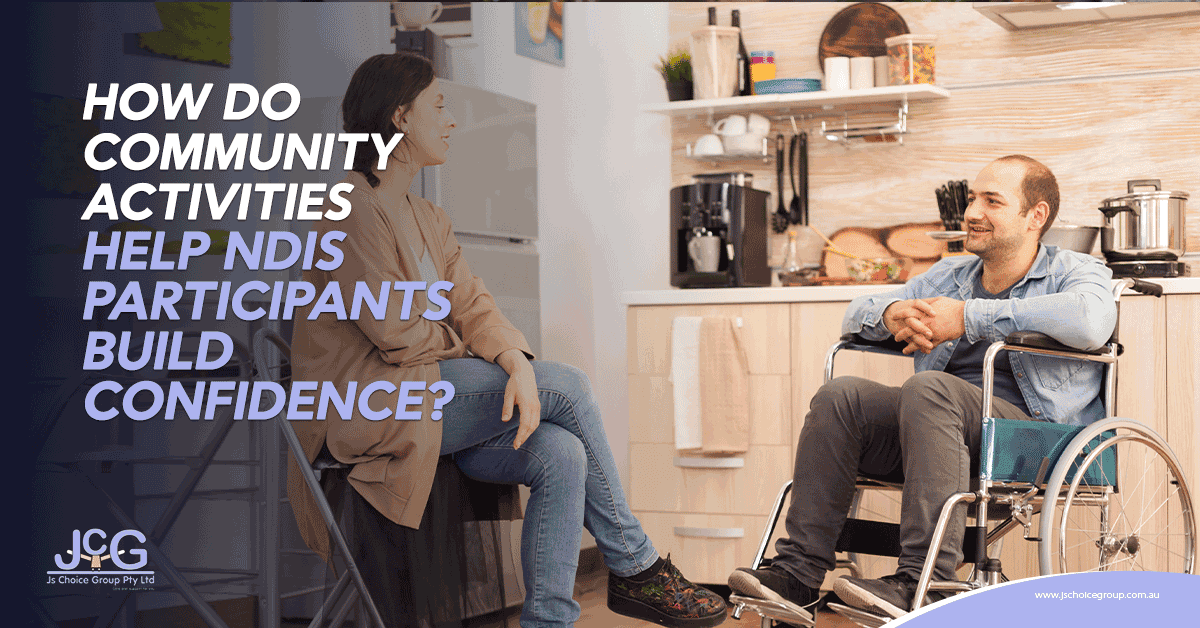
Confidence is not something that arrives overnight. For many NDIS participants, it is built gradually through small, repeated moments of doing something new, managing a challenge, and realising that more is possible than previously thought.
Community activities are one of the most effective tools the NDIS offers for building that confidence. When participants are supported to engage with their local community in ways that are meaningful to them, the benefits extend far beyond the activity itself. If you or someone you support is looking to explore these options, JS Choice Group works with participants across Melbourne to make community participation a real and regular part of life.
Why Confidence Matters for NDIS Participants
Many people living with disability experience reduced confidence as a direct result of their condition or the barriers they have encountered in daily life. Social isolation, limited opportunities to try new things, and a history of being told what they cannot do all contribute to a narrowed sense of what is possible.
Social and community activities can increase a sense of belonging, connection and inclusion, as well as confidence and safety. This is not simply an opinion. The NDIS commissioned an umbrella evidence review covering 57 systematic reviews and 522 relevant studies to understand how community participation shapes outcomes for participants. The findings were consistent: meaningful participation in community life produces measurable improvements in confidence, wellbeing, and independence.
Low self-confidence is also one of the most commonly identified barriers to participation itself. Low participant self-confidence and lack of individualised programs and opportunities to connect with peers who have the same interests are among the key factors that prevent participants from getting involved in the first place. This is why the right support matters so much. Without it, the barrier remains in place. With it, confidence grows with every positive experience.
How Activities Build Confidence Step by Step
Confidence does not come from completing an activity once. It comes from repeated, supported practice in real environments.
As participants join groups and activities, confidence and competence grow, which in turn increases autonomy. Support workers play a key role in this process by breaking tasks into manageable steps, modelling social interactions, and gradually stepping back as a participant's skills develop. A participant might start by attending a community group with a support worker present throughout. Over time, they may need only minimal prompting. Eventually, some participants attend independently altogether.
This graduated approach is called scaffolding. It mirrors the way children naturally learn, and it is just as effective for adults building new skills in unfamiliar environments. The goal is never permanent dependence on a support worker. It is the growth of genuine, lasting capability.
The more people participate, the stronger their belief in their own abilities grows. Each positive experience reinforces the next. A participant who successfully navigates a trip to a community event builds the belief that they can do it again. That belief is confidence, and it compounds over time.
The Types of Activities That Make the Biggest Difference
The activities best suited to building confidence are those that align with a participant's genuine interests. When a person is doing something they actually care about, motivation is higher, engagement is deeper, and the social connections formed are more meaningful.
Activities commonly funded through NDIS community participation supports include sporting clubs, art and craft workshops, cooking classes, music programs, volunteering, cultural and community events, and recreational outings. The common thread is not the activity type. It is the opportunity to practise being in the world alongside other people.
Group-based activities are particularly valuable for confidence building. In a group setting, participants practise social interaction in a structured, supportive environment. They experience being part of a team, contributing to a shared goal, and being recognised by peers. Regular group involvement encourages people to communicate, share ideas, and express themselves in supportive, interest-based settings.
For participants who are newer to community participation or who have higher support needs, one-on-one community access provides a lower-pressure starting point. A dedicated support worker can focus entirely on the individual, moving at their pace and adjusting support as confidence grows.
The Connection Between Confidence and Independence
Confidence and independence are closely linked. As one grows, so does the other.
Evidence and contemporary research indicate that social inclusion correlates with lower rates of depression and better quality of life outcomes for people with disability. Participants who engage regularly in community activities tend to be more motivated, more resilient, and more proactive in pursuing their broader goals. They are also more likely to develop the practical skills that independence depends on, including navigating public transport, communicating with new people, and managing unfamiliar environments.
Over time, many participants progress from requiring intensive support to participating more independently. This progression is the direct outcome the NDIS's Capacity Building funding is designed to achieve. The scheme invests in community participation not just because it is enjoyable, but because it demonstrably builds the skills and confidence that reduce the need for intensive funded supports in the long run.
What Good Community Participation Support Looks Like
The quality of support makes an enormous difference to whether community activities actually build confidence or simply pass time.
Person-centred planning to identify goals, interests and needs of an individual is the foundation of effective community participation support. Activities should be chosen because they align with what matters to the participant, not simply because they are available or convenient. A participant who is passionate about cooking will build more confidence in a cooking program than in an activity chosen because it suits the provider's schedule.
Cultural safety matters too. For participants from diverse cultural backgrounds, community activities that connect them with their own cultural community or that are delivered in a culturally respectful way produce stronger engagement and better outcomes. In Melbourne's Western and Northern suburbs, cultural diversity is not the exception. It is the norm, and good providers design their supports accordingly.
Consistency also plays a significant role. Building confidence in social settings takes time, and that process is disrupted when support workers change frequently or activities are cancelled at short notice. Participants benefit most when they can attend the same activity regularly, with a familiar support worker who knows them well.
How JS Choice Group Supports Confidence Building in Melbourne
At JS Choice Group, we believe that community participation is one of the most powerful investments an NDIS plan can make in a participant's future.
We are a fully registered NDIS provider based in Point Cook, delivering community participation support across Melbourne's Western and Northern suburbs including Werribee, Tarneit, Hoppers Crossing, Sunshine, Footscray, Broadmeadows, and Melton. Our approach is participant-led and culturally inclusive, designed around what matters most to each individual.
We offer both one-on-one community access and structured group programs through our group and centre activities service, giving participants a genuine choice in how they build their social skills and confidence. Our support workers are trained to use scaffolding techniques, match participant interests, and adjust their level of involvement as independence grows.
We also support participants with autism spectrum disorder, ADHD, Pathological Demand Avoidance, psychosocial disabilities, and physical conditions, bringing specialist knowledge to every support relationship we build.
Conclusion
Community activities do not just fill time. They build the confidence, skills, and sense of belonging that allow NDIS participants to live more fully and independently. Every positive experience in the community is a step toward a broader, richer life, and with the right support, those steps add up quickly.
If you are ready to explore how community participation can be built into your NDIS plan, or if you are looking for a provider who will take your goals seriously, we would love to hear from you.
Book a free consultation with JS Choice Group today, or call us on 1300 JS CHOICE.