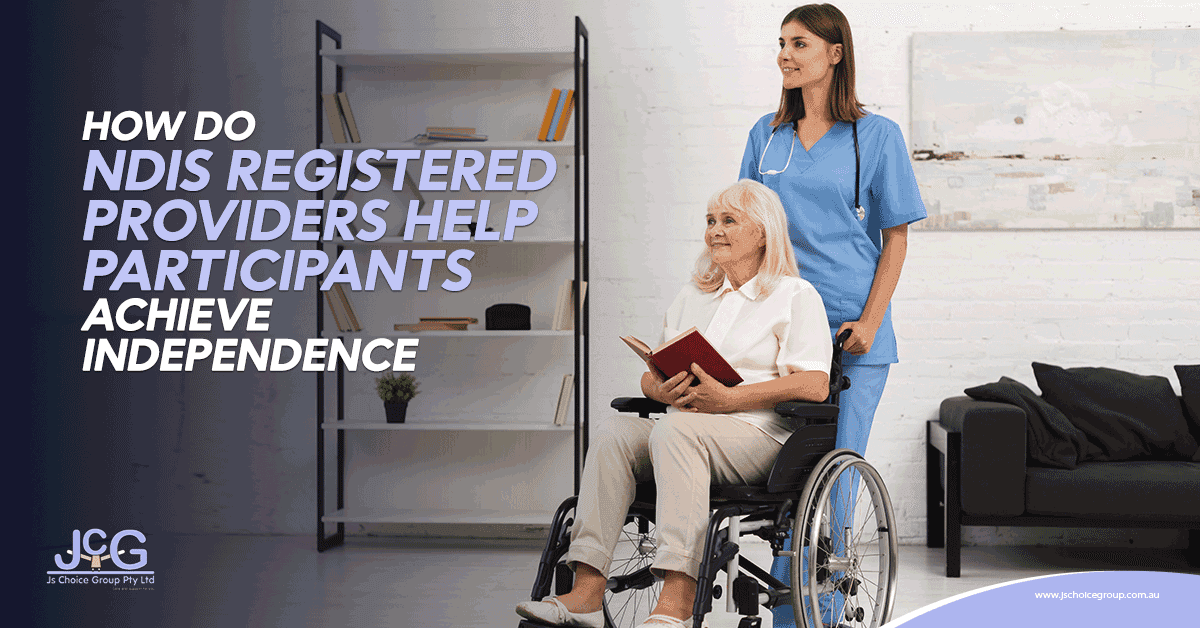
Achieving independence is at the heart of everything the National Disability Insurance Scheme (NDIS) was designed to do. But funding alone does not automatically translate into a more independent life. The real difference is made by the people and organisations who walk alongside participants every step of the way, NDIS registered providers.
If you are an NDIS participant, a family member, or a carer trying to understand how a registered provider can genuinely change someone's life, this guide is for you. We will break down exactly what registered providers do, how they support independence across every area of daily life, and what to look for when choosing the right one for your needs.
What Is an NDIS Registered Provider?
An NDIS registered provider is an individual or organisation that has been approved by the NDIS Quality and Safeguards Commission to deliver funded supports and services to NDIS participants. To become registered, a provider must pass a formal audit process demonstrating compliance with the NDIS Practice Standards and the NDIS Code of Conduct.
This matters because registration is not just a badge, it is a commitment to quality, safety, and accountability. Registered providers are subject to ongoing audits, staff screening requirements, and strict service standards. This gives participants and their families peace of mind that the care they receive meets a nationally recognised benchmark.
From 1 July 2026, mandatory registration requirements are expanding to include providers of Supported Independent Living (SIL) and platform providers, further strengthening quality safeguards across the scheme.
While both registered and unregistered providers must follow the NDIS Code of Conduct, only registered providers can deliver services to NDIA-managed participants and are listed on the official NDIS Provider Register, making them easier to find and verify.
The Core Goal: Independence, Not Dependence
A common misconception about disability support is that providers do things for participants. The best registered providers do something different, they work with participants to build the skills, routines, and confidence needed to do more things independently over time.
This philosophy is captured in the NDIS's own principles: the scheme funds supports "aimed at increasing independence, inclusion, and social and economic participation." Every support, whether it is help with cooking, access to therapy, or assistance getting to a community event, should move a participant closer to their own goals, not further from them.
Independence looks different for everyone. For one person, it might mean learning to manage their morning routine without a support worker. For another, it could mean having the confidence to travel to work independently or join a social group. A great registered provider understands this deeply, and shapes their services around the individual, not a one-size-fits-all template.
7 Key Ways NDIS Registered Providers Support Independence
1. Assistance with Daily Life
The foundation of independence is being able to manage everyday life comfortably and safely at home. NDIS registered providers deliver assistance with daily life, support with personal care, household tasks, meal preparation, and daily routines, in a way that builds skills rather than creating reliance.
A skilled support worker does not simply cook your meals. They may cook alongside you, teaching techniques and building confidence until you can prepare simple meals on your own. This graduated approach, known as capacity building within daily living, is what separates quality providers from basic task-completion services.
At JS Choice Group, our daily living support is designed to give participants control over their own home environment, supporting comfort, routine, and growing independence at every stage.
2. Capacity Building and Skills Development
Capacity Building is one of the three major NDIS funding categories, and it exists for one reason: to invest in your future independence. Registered providers deliver a wide range of capacity-building supports, including:
Improved Daily Living —Therapy programs and skills training to increase what you can do on your own
Employment Support — Assistance finding and maintaining work in open or supported employment
Learning and Life Skills — Building the practical abilities needed to live and participate more independently
Support Coordination — Helping you understand and maximise your NDIS plan
A good registered provider does not just deliver a service and leave. They set measurable goals with you, track your progress over time, and adjust the support as your abilities grow. The aim is always to reduce your need for funded support in areas where you have built genuine independence, freeing up your plan budget for areas where you still need help.
3. Social and Community Participation
Isolation is one of the most significant challenges facing people with disability in Australia. Registered providers address this directly through social and community participation support, helping participants access the community, build friendships, and engage in activities that bring meaning and connection to their lives.
This might include:
Joining a sporting club, art class, or community group
Attending religious or cultural events
Volunteering or engaging in local activities
Building the social skills and confidence to initiate and maintain friendships
Community participation is not just about wellbeing, it is directly linked to long-term independence. Participants who are socially connected are more likely to develop support networks, build resilience, and navigate life's challenges with greater confidence.
JS Choice Group's social and community participation support helps participants across Melbourne get out and about, reduce isolation, and build the social foundations for a richer, more self-directed life.
4. Allied Health and Therapy Services
Independence is often built in a therapy room long before it is visible in daily life. Allied health professionals, occupational therapists, physiotherapists, speech pathologists, psychologists, play a critical role in helping participants develop the physical, cognitive, and communication skills that underpin independence.
Registered NDIS providers either employ allied health professionals directly or coordinate closely with therapy teams to ensure that treatment goals are reflected in everyday support. For example:
An occupational therapist assessing and recommending home modifications to improve mobility
A speech pathologist working on communication strategies to help a participant express their needs more clearly
A physiotherapist developing an exercise program to maintain strength and reduce the risk of falls
JS Choice Group's allied health services take a holistic approach, working alongside your existing therapy team to implement programs that help you manage your condition and build long-term capacity.
5. Psychosocial Recovery Coaching
For participants living with psychosocial disabilities, including schizophrenia, PTSD, bipolar disorder, and other significant mental health conditions, the path to independence requires a different kind of support. Psychosocial Recovery Coaching is a specialised NDIS-funded service delivered by trained recovery coaches who understand the unique challenges of mental health conditions.
A recovery coach helps participants to:
Develop practical strategies for managing mental health in daily life
Set and work toward meaningful personal goals
Build resilience and the ability to self-manage during difficult periods
Navigate the health system and connect with the right support services
Rebuild relationships, routines, and purpose
This form of support is profoundly independence-focused. The goal is not to manage someone's life for them but to equip them with the tools, strategies, and confidence to manage it themselves.
JS Choice Group's psychosocial recovery coaching is delivered by specialists who understand that recovery is not a straight line, and who are committed to walking alongside participants at every stage of their journey.
6. Transport Assistance
One of the most practical barriers to independence is getting from A to B. Without reliable transport, even the most well-designed NDIS plan falls short, therapy appointments are missed, community activities become inaccessible, and social isolation deepens.
Registered NDIS providers deliver transport assistance to ensure participants can travel safely and confidently to the places that matter: medical appointments, work, study, community activities, social events, and more. For many participants, this is the support that unlocks everything else in their plan.
Beyond simply providing a vehicle, great transport support builds travel skills over time. Some participants progress from requiring a dedicated support worker for every trip to being able to use public transport independently, a significant achievement in their independence journey.
JS Choice Group's transport assistance connects participants across Melbourne's Western and Northern suburbs with the reliable, safe travel support they need to stay connected and engaged.
7. Group and Centre-Based Activities
Group programs and centre-based activities serve a dual purpose in an independence-focused support model. They provide structured opportunities to build practical skills, cooking, communication, budgeting, self-care, in a safe, supportive environment, while simultaneously addressing social wellbeing through connection and shared experience.
Group programs are also highly cost-effective, allowing participants to make the most of their NDIS funding while engaging in meaningful activity alongside others who understand their experiences. For many participants, group programs become a gateway to broader community participation and, in some cases, employment.
JS Choice Group's group and centre activities are designed to build skills, foster friendships, and grow the confidence participants need to participate more fully in community life.
Registered vs Unregistered Providers: Why It Matters for Independence
When choosing supports, participants are sometimes drawn to unregistered providers because of perceived flexibility or lower cost. However, it is important to understand what registration actually means for the quality of your support.
Registered Provider
Unregistered Provider
NDIS Commission oversight
Yes
No
Compliance with NDIS Practice Standards
Mandatory
Not required
Worker screening checks
Mandatory
Not always required
Available to NDIA-managed participants
Yes
No
Listed on NDIS Provider Register
Yes
No
Audit and quality assurance
Regular
None
For complex or high-risk supports, including personal care, psychosocial recovery coaching, community nursing, or behaviour support, working with a registered provider is not just recommended, it is essential for your safety and the quality of your outcomes.
What to Look for in an NDIS Registered Provider
Not all registered providers are equal. Registration sets a minimum standard, but the best providers go well beyond it. When choosing a provider to support your independence goals, consider:
Person-centred approach: Does the provider genuinely listen to your goals and tailor support around you, or do they offer a rigid, one-size-fits-all program?
Cultural and linguistic inclusivity: Does the provider understand and respect your background, traditions, and language? Cultural comfort is essential to effective support.
Neuro-affirming practice: For participants with autism, ADHD, or PDA, does the provider understand neurodivergence and adapt their communication and support style accordingly?
Transparency and communication: Does the provider explain your options clearly, respect your choices, and keep you informed about your support and budget?
Track record: Do they have experience supporting people with your specific disability or condition? Can they demonstrate genuine outcomes for participants?
Flexibility: Can they accommodate changes to your needs and schedule without excessive bureaucracy?
How JS Choice Group Supports Independence in Melbourne
JS Choice Group is a fully registered NDIS provider based in Point Cook, delivering participant-led, culturally inclusive support across Melbourne's Western and Northern suburbs. Our ethos is simple: we believe every person with a disability deserves a life of choice, dignity, and genuine independence.
We are experienced in supporting participants with:
Autism Spectrum Disorder (ASD) and ADHD
Pathological Demand Avoidance (PDA)
Psychosocial disabilities, including schizophrenia and PTSD
Physical and neurological conditions, including stroke and muscular dystrophy
Intellectual disability and complex support needs
Our comprehensive services span every stage of the independence journey:
Assistance with Daily Life — Building independence at home through skills-based personal and household support
Social & Community Participation — Connecting you to the community, activities, and people that enrich your life
Transport Assistance — Safe, reliable travel support across Melbourne
Allied Health Services — Holistic therapy support aligned with your plan goals
Psychosocial Recovery Coaching — Specialist coaching to build resilience and self-directed recovery
Group & Centre Activities — Skill-building group programs in a safe, supported environment
Community Nursing Care — Professional clinical support for complex health needs at home
Emergency Respite — Flexible short-notice support when families need relief
What makes us different? We never stop learning. We design support plans that suit your needs, not ours, and we give you the tools to navigate the NDIS on your terms.
Frequently Asked Questions
Can a registered provider help me understand my NDIS plan?
Yes. Many registered providers offer support coordination as part of their services, helping you understand your funding categories, connect with the right supports, and get the most out of your plan. At JS Choice Group, we offer free consultations to help new participants get started with confidence.
Can I switch registered providers if I am not happy?
Absolutely. Choice and control is a core NDIS principle. You can change providers at any time. Your provider is required to assist you through the transition process and ensure continuity of your support.
Do I need a registered provider for all my support?
Not necessarily, it depends on how your plan is managed. NDIA-managed participants must use registered providers. Plan-managed and self-managed participants can choose registered or unregistered providers, though registered providers offer greater accountability and safety assurance.
What is the difference between a support worker and a support coordinator?
A support worker provides direct, hands-on support, helping with daily living, transport, community access, and so on. A support coordinator helps you manage your plan, connect with providers, and ensure your supporters are working together toward your goals.
Ready to Start Your Independence Journey?
Whether you are new to the NDIS or looking for a provider who truly understands your goals, JS Choice Group is here to help. We serve participants across Melbourne including Point Cook, Werribee, Tarneit, Hoppers Crossing, Sunshine, Footscray, Broadmeadows, and surrounding suburbs.