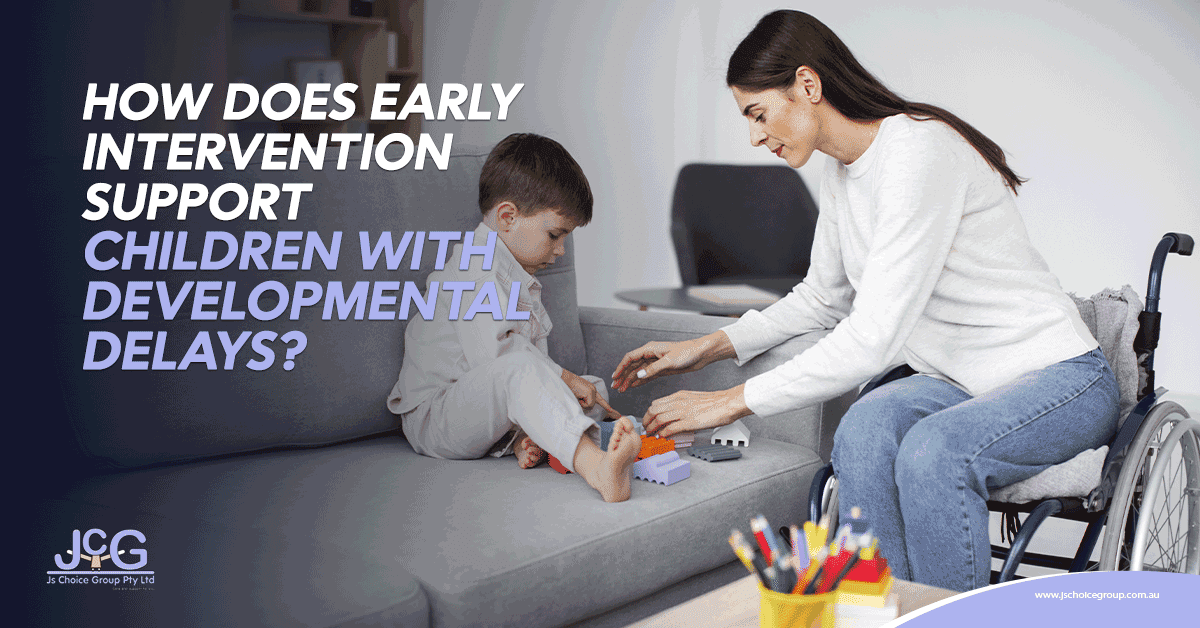
When a parent first notices that their child is not reaching developmental milestones at the expected pace, whether that is talking, walking, socialising, or managing everyday tasks, it can be an anxious and confusing time. The question most families ask is simple: what do we do next, and will early support actually make a difference?
The answer to the second question is a clear yes. Decades of research consistently show that early intervention, the right support, delivered at the right time, produces better outcomes for children with developmental delays than support that begins later. The earlier a child's needs are identified and addressed, the greater their capacity for growth across every area of development.
This guide explains what early intervention is, how it supports children with developmental delays, what the NDIS funds, and how Melbourne families can access these supports today.
What Is a Developmental Delay?
A developmental delay occurs when a child does not reach expected developmental milestones within the typical age range. Development is usually measured across five key domains:
Communication and language — Understanding and using words, gestures, and sentences
Motor skills — Both gross motor (crawling, walking, running) and fine motor (grasping, drawing, self-feeding)
Cognitive development — Problem-solving, learning, memory, and attention
Social and emotional development — Forming relationships, managing emotions, and interacting with peers
Self-care and adaptive behaviour — Dressing, eating, toileting, and daily routines
A delay in one or more of these areas does not automatically mean a child has a permanent disability. In some cases, delays are temporary and resolve with targeted support. In others, particularly where delays are significant, across multiple domains, or linked to a diagnosed condition, early intervention becomes essential to reduce long-term impact.
One in five Australian children has a disability or developmental concern, yet many are still not receiving timely support. Early identification and intervention is the key to changing this.
Why Does Early Intervention Matter So Much?
The science behind early intervention is compelling. The brain is at its most adaptable, most "plastic", during the first years of life. Neural connections form at a rapid pace during early childhood, and the experiences a child has during this window directly shape the architecture of their developing brain.
When a child with a developmental delay receives targeted, high-quality support during this critical period, the benefits compound. Skills built early become the foundation for later learning. Communication skills developed in the toddler years support literacy at school. Social skills practised in early childhood carry forward into friendships and, eventually, the workplace.
The purpose of early intervention is to lessen the impact of a person's impairment upon their functional capacity by providing support at the earliest possible stage. Early intervention support is also intended to benefit a person by reducing their future need for supports and by strengthening the sustainability of their informal supports, for example, building the capacity of their carer.
This last point is important and often overlooked. Early intervention is not just about the child. It is also about giving parents, carers, and families the knowledge, strategies, and confidence to support their child's development in everyday moments, at breakfast, at the playground, at bathtime. The family is not a bystander in early intervention. They are the most powerful delivery vehicle for it.
What Types of Early Intervention Support Are Available?
Early intervention covers a broad spectrum of supports delivered by trained professionals. The specific mix of supports a child receives will depend on their individual needs, the domains affected, and the goals set in consultation with the family.
Speech Pathology
For children with communication delays, late talking, limited vocabulary, unclear speech, or difficulties understanding language, speech pathology is often the cornerstone of early intervention. A speech pathologist works with the child (and their family) to build the communication foundations that underpin all other learning and social interaction.
Early speech pathology support has one of the strongest evidence bases in all of early childhood intervention, particularly for children with autism spectrum disorder, where communication differences are central to the diagnostic profile.
Occupational Therapy
Occupational therapists (OTs) help children develop the skills needed for the "occupations" of childhood, play, learning, self-care, and social participation. For children with developmental delays, an OT might work on:
Fine motor skills — pencil grip, scissors, buttons, self-feeding
Sensory processing — helping children who are over or under-sensitive to sensory input to engage more comfortably with daily activities
Self-care skills — dressing, toileting, and managing daily routines independently
Play skills — learning to play purposefully and imaginatively alongside peers
Physiotherapy
Where a child's developmental delay affects their physical development, delayed walking, poor coordination, low muscle tone, or difficulties with balance, physiotherapy provides targeted movement-based intervention to build strength, mobility, and physical confidence.
Psychology and Behaviour Support
For children experiencing emotional regulation difficulties, anxiety, or behavioural challenges related to their developmental delay or disability, psychology and behaviour support provide strategies for the child and their family to manage these challenges effectively. This is particularly relevant for children with autism spectrum disorder, ADHD, or Pathological Demand Avoidance (PDA).
Early Childhood Education and Care (ECEC) Support
Inclusion in mainstream childcare and kindergarten settings is itself a powerful form of early intervention. When a child with developmental delay is supported to participate in early childhood education alongside peers, with appropriate adjustments and trained staff, they benefit from natural learning opportunities, social modelling, and the daily routines that build independence.
Family Capacity Building
The early childhood approach gives families information about best-practice early childhood intervention supports and how they can help their child, increases their confidence and capacity to manage and respond to their child's support needs, and increases the child's ability to do activities they need or want to do throughout their day.
Equipping families with practical strategies, how to support communication during meals, how to respond to meltdowns, how to encourage independence in daily routines, multiplies the impact of every therapy session, because those strategies are applied throughout every waking hour.
How the NDIS Funds Early Intervention
For children who qualify as NDIS participants, early intervention supports are funded across the Core Supports and Capacity Building budget categories.
The early childhood approach helps children younger than 6 with developmental delay, or children younger than 9 with disability, and their families to access the right support when they need it. Children younger than 6 do not need a diagnosis to get support through the early childhood approach where there are concerns about their development.
This is significant. Families do not need to wait for a formal diagnosis before accessing NDIS early childhood support, a major change from older disability service systems where diagnosis was the gateway to everything.
When a family contacts the NDIS about a child under 9, they are connected to an Early Childhood Partner, a local organisation funded by the NDIA to deliver the early childhood approach.
Early childhood partners are teams of early childhood professionals, such as occupational therapists, speech pathologists and early childhood educators. Your early childhood partner will work with you to gather information about your child and use it to determine if your child meets the criteria for developmental delay. They will observe your child in places where they spend lots of time, such as your home or at their childcare centre, showing what your child is good at, what they like to do, and the areas where they may need more support than other children the same age.
Once it is established that a child meets the NDIS eligibility criteria, the Early Childhood Partner helps the family to submit an access request and develop the child's first NDIS plan, which then funds the early intervention support described above.
What Does Quality Early Intervention Look Like?
Not all early intervention is created equal. The NDIS Quality and Safeguards Commission has identified clear markers of quality practice in early childhood intervention. Families should look for providers who:
Deliver supports in natural environments. NDIS early childhood intervention supports are most effective when delivered in the everyday settings where children live, play and learn, at home, in childcare, in the community, rather than exclusively in clinical settings. A speech pathologist who observes a child in their childcare setting and coaches the educators on communication strategies is far more impactful than one who sees the child for 45 minutes a week in isolation.
Prioritise family involvement. The most effective early intervention programmes actively involve parents and carers as partners, not observers. Families who understand the goals, the strategies, and the reasoning behind interventions can reinforce learning across every moment of the day.
Set measurable, meaningful goals. Quality early intervention is goal-directed. Goals should be meaningful to the family, not just clinical benchmarks, and should be reviewed regularly to track progress and adjust supports as the child develops.
Use evidence-based approaches. The specific therapy models and interventions used should be grounded in research evidence. Families are encouraged to ask providers: what is the evidence base for the approach you are using with my child?
Avoid harmful practices. Some historical approaches to developmental delay and autism, particularly compliance-based or rewards-and-punishment behavioural models, are now understood to be harmful. Quality providers use neuro-affirming, child-led approaches that respect the child's identity and autonomy while building genuine skills.
The 2026 Thriving Kids Programme: A New Layer of Support
The landscape for early childhood developmental support in Australia is changing significantly in 2026. Thriving Kids will help children aged 8 and under with developmental needs get support earlier, using local services, starting from 1 October 2026. Children with higher support needs will still get help through the NDIS.
Governments have committed to jointly contribute $4 billion over 5 years to implement the first phase of Foundational Supports, known as Thriving Kids. This investment will support children aged 8 and under with developmental delay and/or autism with low to moderate support needs, and their families, carers and kin.
The programme is designed to deliver faster, more accessible support to children with mild to moderate developmental needs, through schools, childcare centres, and community health services, without requiring a full NDIS application. Parents and families will be able to access trusted information, advice and evidence-based child development supports delivered by allied health professionals, where these are needed to achieve good outcomes.
Critically, for families already on the NDIS: children with permanent and significant disability and children aged 8 and under with developmental delay and/or autism who have substantially reduced functional capacity, high support needs, will remain eligible for the NDIS, subject to usual arrangements.
The changes to NDIS access arrangements for children with low to moderate support needs will not come into effect until 1 January 2028 at the earliest. Children already on the NDIS before that date remain on the scheme under current arrangements.
Signs That Your Child May Benefit From Early Intervention
If you are unsure whether your child might benefit from early intervention, here are some of the developmental signs that commonly prompt a referral:
Limited or no speech by 18 months, or loss of words previously acquired
Difficulty understanding simple instructions by age 2
Limited eye contact, social smiling, or interest in other children
Significant difficulties with motor milestones, not sitting by 9 months, not walking by 18 months
Persistent difficulties with sensory experiences, extreme reactions to textures, sounds, or light
Significant emotional dysregulation, meltdowns, distress, or anxiety that interferes with daily life
Difficulty with self-care tasks well beyond the typical age range
Concerns raised by a childcare educator, kindergarten teacher, or maternal and child health nurse
You do not need certainty before reaching out. Identifying developmental concerns and disability early to give timely support will improve outcomes for all children and their families. If you have a concern, the right step is to act on it.
How JS Choice Group Supports Early Childhood Development in Melbourne
At JS Choice Group, we are a fully registered NDIS provider based in Point Cook, Melbourne. We have specialist experience supporting children with autism spectrum disorder, ADHD, Pathological Demand Avoidance, developmental delay, and intellectual disability, and we take a neuro-affirming, family-centred approach to every child we work with.
We understand that no two children are alike. We design every support plan around the individual child, their strengths, their goals, their family, and their cultural context. We never apply a one-size-fits-all model to a uniquely developing child.
Our services relevant to children with developmental delays and their families include:
Assistance with Daily Life — Practical support with self-care and daily routines, building independence step by step
Allied Health Services — Therapy support integrated into your child's everyday environment and NDIS plan goals
Social & Community Participation — Supporting children to access community activities, playgroups, and social settings
Group & Centre Activities — Structured group programs that build skills, friendships, and confidence
Transport Assistance — Reliable travel to therapy, childcare, school, and community activities
Emergency Respite — Flexible, short-notice support for families who need a break
We also offer free consultations for families new to the NDIS, whether you are at the very beginning of the journey or looking for a provider who better understands your child's needs. Book your free consultation here.
We serve families across Point Cook, Werribee, Tarneit, Hoppers Crossing, Sunshine, Footscray, Broadmeadows, Melton, and surrounding suburbs. Support services available 24 hours a day.
Frequently Asked Questions
How early should I seek early intervention for my child?
As early as possible. There is no minimum age, if you have concerns about your child's development at any point before age 9, reach out to an Early Childhood Partner or your child's GP. For children under 6, no formal diagnosis is required to begin the process.
Will my child need to stay on the NDIS forever if they receive early intervention?
Not necessarily. For some children, early intervention achieves its goals and reduces or eliminates the need for ongoing NDIS funding. For others with permanent and significant disability, the NDIS continues to provide long-term support. Every child's trajectory is different.
What if I live in an outer suburb and cannot easily access therapy services?
This is a real challenge for many Melbourne families, particularly in outer western and northern growth corridors. JS Choice Group is specifically based in Point Cook and serves the communities of Melbourne's western and northern suburbs, we understand the access challenges in these areas and work hard to deliver supports close to where families live.
Can I access early intervention services before my child's NDIS plan is approved?
Yes. Early Childhood Partners can provide some short-term supports before a formal NDIS plan is in place, while the access and planning process is underway.
Do Not Wait, Early Action Changes Everything
If you are concerned about your child's development, the single most important thing you can do is reach out now. Early intervention works best when it starts early, and the pathway to support has never been more accessible.