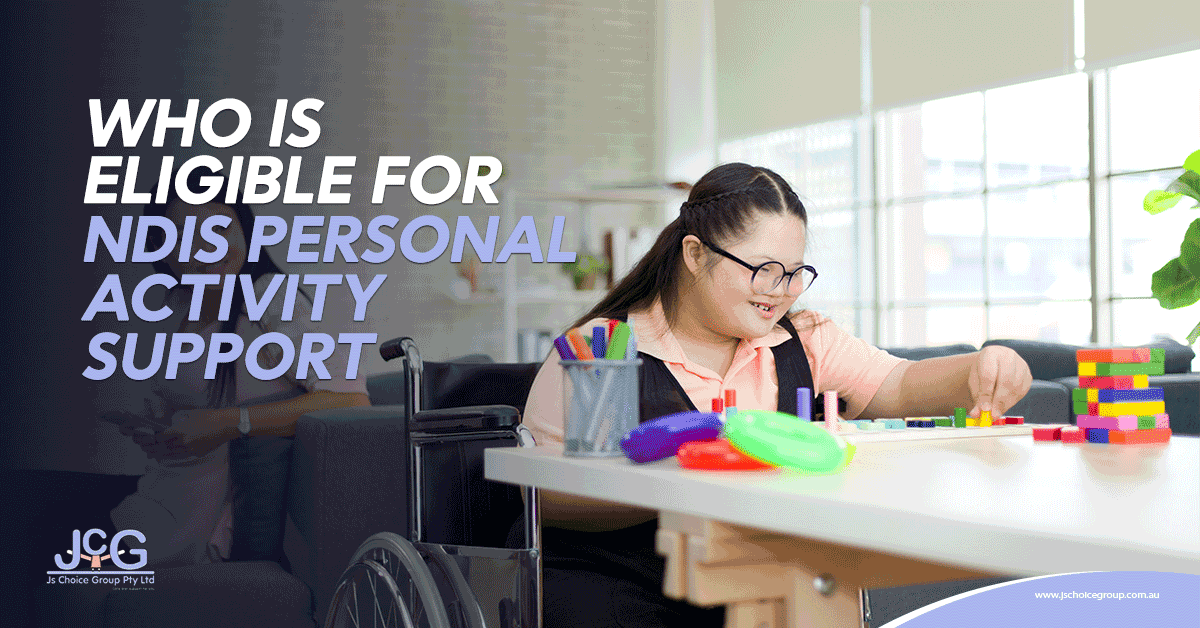
To be eligible for NDIS Personal Activity Support, you must be an NDIS participant who requires assistance with daily self-care tasks due to a permanent and significant disability. Eligibility is based on showing that the support is "reasonable and necessary" to help you live independently, maintain your health, or increase your community participation. Generally, this applies to those who cannot perform basic daily activities safely or effectively without the help of a support worker.
Under the NDIS, participants can access this funding through the "Assistance with Daily Life" category in their Core Supports budget. This support is highly personalized, meaning the amount of funding and the specific tasks covered depend entirely on your unique functional capacity and the goals outlined in your NDIS plan.
What Is NDIS Personal Activity Support?
NDIS Personal Activity Support refers to physical assistance or supervision with everyday self-care tasks. These are activities that most people perform for themselves every day, but which may be difficult or unsafe for someone living with a disability.
Support providers typically help with tasks such as showering, dressing, eating, and managing personal hygiene. By providing a dedicated worker to assist with these intimate duties, the NDIS ensures participants can manage their daily living assistance with dignity while remaining in their own homes.
Understanding the Eligibility Criteria
Determining who is eligible for this specific funding requires looking at the NDIS "Reasonable and Necessary" framework.
Permanent and Significant Disability
The first step is being an NDIS participant, which requires having a disability that is likely to be lifelong and has a substantial impact on your ability to complete daily tasks.
Functional Impact on Self-Care
Eligibility for personal activity support specifically focuses on your "functional capacity". If your disability means you struggle with the following, you are likely to qualify for funding:
Self-Care: Challenges with washing, toileting, or dressing.
Mobility: Difficulty moving around the home or getting in and out of bed.
Communication: Needing help to express needs related to your health or safety.
Goal Alignment
NDIS plans often include funding for personal activities because they directly support a participant's goal of living more independently or engaging in social activities.
Common Services Covered Under Personal Activity Support
Once eligibility is confirmed, participants can use their NDIS funding to hire disability support workers for a range of essential tasks.
Personal Hygiene: Help with showering, bathing, oral hygiene, and hair care.
Dressing: Assistance with putting on or taking off clothes, including specialized garments.
Continence Management: Help with toileting or using continence aids safely.
Eating and Drinking: Physical assistance with consuming meals or ensuring hydration.
Mobility and Transfers: Using hoists or helping a participant move from a wheelchair to a bed.
Expert Note: If these daily tasks require medical expertise rather than just physical help, your NDIS support coordination team can help you apply for NDIS community nursing care instead.
The Benefits of Accessing Personal Activity Support
This support is one of the most vital components of the NDIS because it provides the foundation for a participant’s entire day.
Fostering Independence
While it involves receiving help, this support actually increases independence. By having a professional handle difficult self-care tasks, participants conserve the energy needed to attend university, work, or social events.
Supporting Health and Safety
Regular assistance with hygiene and mobility reduces the risk of skin infections, falls, and other health complications that could lead to hospital stays.
Choice and Control
Under the NDIS, you have the right to choose who provides your personal support. This allows you to build a trusting relationship with a worker who understands your routine and respects your privacy.
Tips for Applying for Personal Activity Support
If you are preparing for a plan meeting or a review, having the right evidence is the key to securing the correct amount of support.
Request an Occupational Therapy Report: A Functional Capacity Assessment (FCA) is the "gold standard" of evidence. It details exactly what you can and cannot do and how many hours of support you need.
Be Specific About Your Routine: Explain your "typical day" to the NDIS planner. Highlight the areas where you currently rely on family members and how professional help would improve your life.
Use Support Coordination: If your situation is complex, ensure you have NDIS support coordination to help you find and manage your team of workers.
Frequently Asked Questions
Who is eligible for NDIS in Australia?
To be eligible for the NDIS, you must be under 65 years of age, live in Australia as a citizen or permanent resident, and have a permanent and significant disability that affects your ability to take part in everyday activities.
What services does NDIS cover?
The NDIS covers a wide range of disability-related supports, including personal care, household tasks, therapy, equipment, and disability transport services, provided they are considered "reasonable and necessary".
Can family members be support workers?
Generally, the NDIS does not fund family members to provide personal support. This is to ensure participants have professional care and to prevent the breakdown of family relationships due to "carer burnout".
Conclusion
Personal Activity Support is about more than just physical help, it is about giving you the dignity and freedom to live life on your own terms. By understanding the eligibility criteria and gathering the right evidence, you can secure the support needed to stay safe and independent in your home.
If you are exploring NDIS support options, understanding your plan and available services can help you make informed decisions for your care and independence. For more information on navigating these services, consider reaching out to an NDIS support coordination specialist who can help you implement your funding effectively.