
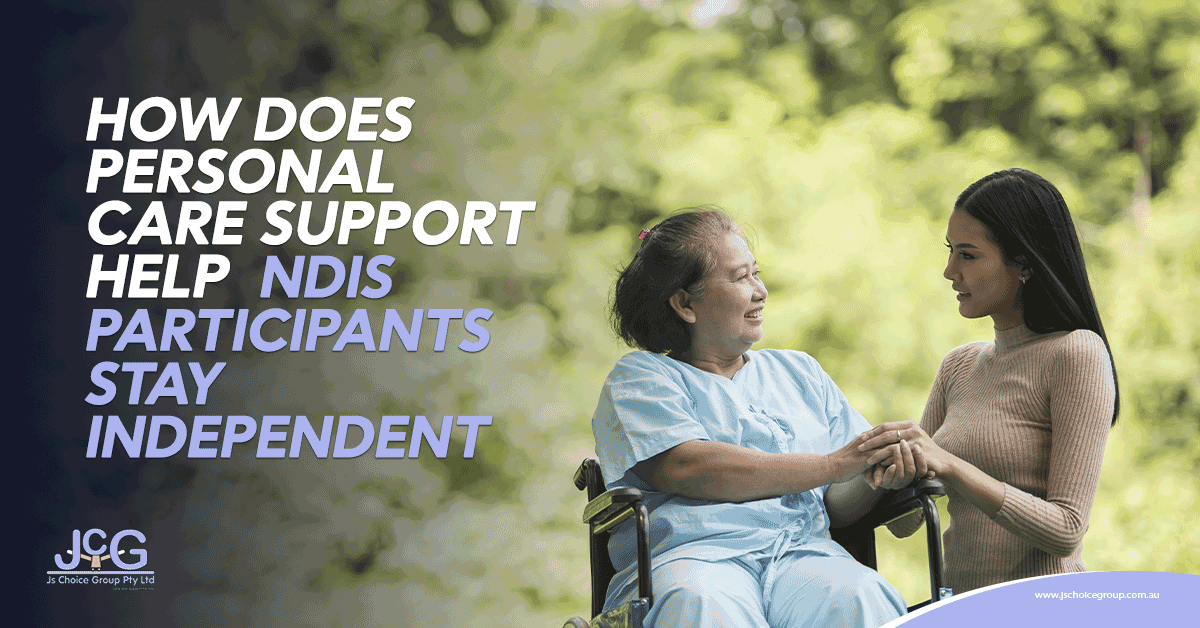
Personal Care Support helps NDIS participants stay independent by providing essential assistance with daily self-care tasks that would otherwise be difficult or unsafe to perform alone. By receiving professional help with hygiene, dressing, and mobility, participants can start their day with dignity and conserve their energy for social, educational, or employment goals.
This support is designed to be a bridge to autonomy, ensuring that your health and safety are managed while you maintain choice and control over your daily routine. Under the NDIS, participants can access these services through their Core Supports budget, allowing for a personalized approach to daily living assistance that respects their privacy and personal preferences.
What Is Personal Care Support Under the NDIS?
Personal Care Support is a funded service that provides physical assistance with private, daily activities to help individuals with disability maintain their health and wellbeing. It is primarily delivered by disability support workers who visit your home to help you complete tasks that are essential for self-care but are hindered by the functional impact of your disability.
Support providers typically help with activities that are considered "reasonable and necessary" to maintain a participant's quality of life. Because these tasks are often intimate, the NDIS ensures that participants can choose workers they feel comfortable with, fostering a supportive and professional relationship.
Key Services Included in Personal Care
NDIS plans often include funding for a variety of tasks tailored to the specific needs of the individual. These services generally cover:
Hygiene and Grooming: Assistance with showering, bathing, oral health, and hair care.
Dressing and Appearance: Helping with putting on clothes, managing fasteners, and using specialized orthotics.
Toileting and Continence: Support with bladder and bowel management, including the use of specialized equipment or incontinence aids.
Eating and Drinking: Physical help with consuming meals and ensuring the participant remains hydrated throughout the day.
Transfers and Mobility: Assistance moving safely in and out of bed, using hoists, or transferring to wheelchairs.
Expert Insight: If your needs extend beyond physical assistance and require medical expertise, your NDIS support coordination provider can help you access NDIS community nursing care for clinical tasks like wound management or catheter care.
Benefits of Personal Care for Independence
The primary goal of NDIS personal care services is to empower the participant to live a life of their choosing. There are several ways this support directly impacts long-term independence:
1. Conservation of Energy
For many participants, performing basic self-care can be physically and mentally exhausting. By having a support worker handle these tasks, the participant conserves energy for community participation or pursuing hobbies and work.
2. Dignity and Professionalism
Receiving help with intimate tasks from a professional support worker often feels more dignified than relying solely on family or friends. It allows familial relationships to focus on social connection rather than caregiving duties.
3. Skill Development
Many support workers focus on "active support," which means they help you do as much as you can for yourself. Over time, this can help participants build the strength or routine needed to perform some tasks with less assistance.
Eligibility and Funding Categories
To access this support, the impact of your disability must be clearly documented. The NDIA usually requires evidence from allied health professionals, such as an Occupational Therapist, to justify the level of funding.
Core Supports vs. Capacity Building
Personal care is typically funded under Core Supports – Assistance with Daily Life. However, if your goal is to learn how to do these tasks yourself, you might also have funding in Capacity Building – Improved Daily Living for specialized training or therapy.
Real-Life Use Case: Morning Routines
Consider a participant with limited upper-body mobility who wants to work part-time. A support worker arrives at 7:00 AM to help them shower, dress, and prepare breakfast. By 8:30 AM, the participant is ready to use disability transport services to head to their job, feeling refreshed and ready to contribute.
Frequently Asked Questions
Who is eligible for NDIS personal care?
Participants who have a permanent and significant disability that prevents them from completing self-care tasks independently are generally eligible. Eligibility is based on a functional capacity assessment that proves the support is "reasonable and necessary".
Can family members provide personal care?
The NDIS generally expects family and friends to provide "informal support" as part of their normal relationship. Funding is usually provided to hire professional workers to ensure the participant's needs are met consistently and to prevent carer burnout.
How do I find a support worker for personal care?
You can work with your NDIS support coordination team to find registered providers, or you can use plan management to hire your own staff if your plan is set up for it.
Conclusion
Personal care support is the foundation upon which independence is built. By ensuring your daily health and hygiene needs are met with professional care, you gain the freedom to focus on the activities that make life fulfilling.
If you are exploring NDIS support options, understanding your plan and available services can help you make informed decisions for your care and independence. Connecting with an experienced NDIS support coordination team can help you navigate these choices and find the best workers for your unique needs.