
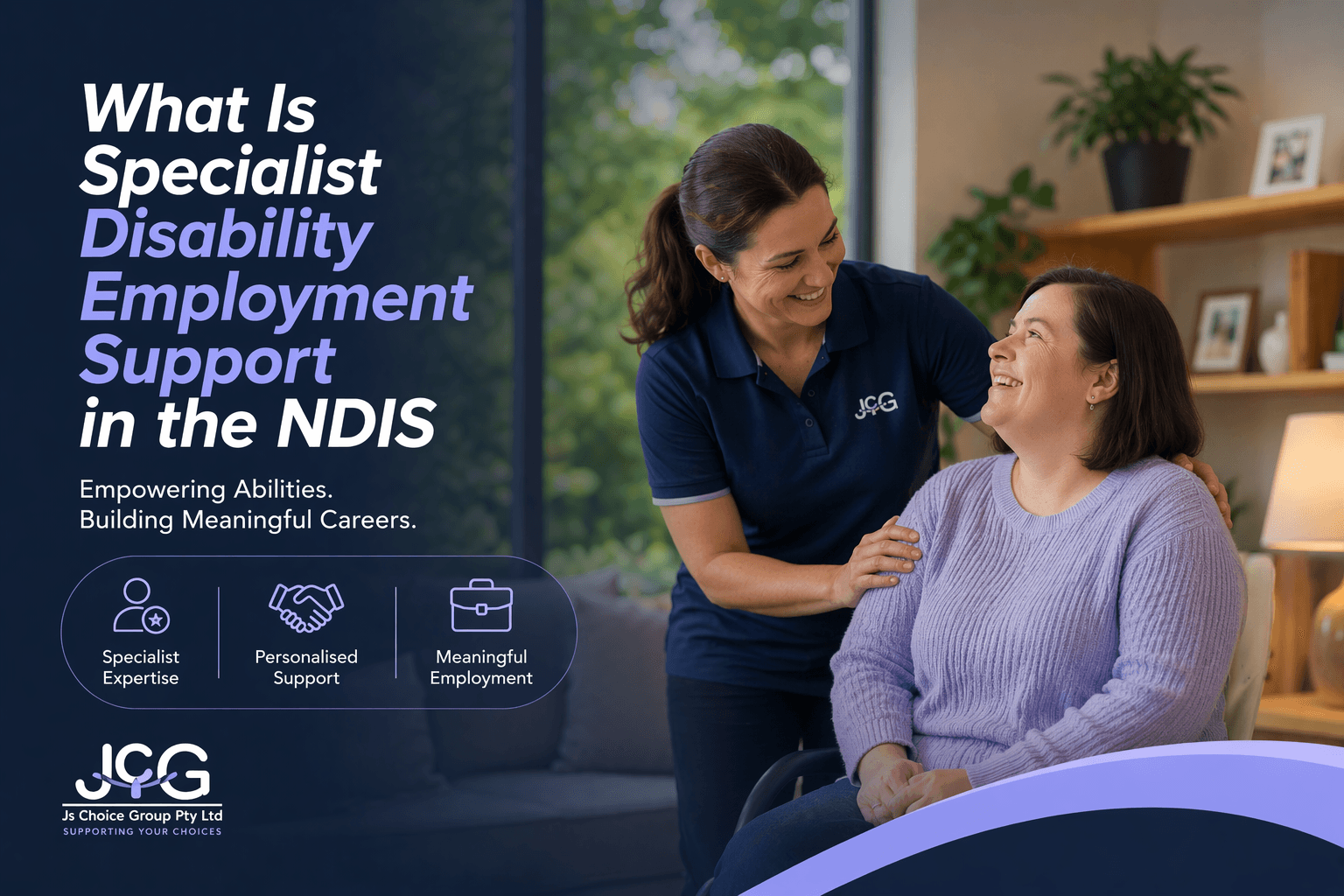
Specialist Disability Employment Support is a dedicated NDIS service designed to help participants with significant disabilities prepare for, find, and maintain meaningful employment. Unlike standard job services, it provides intensive, ongoing assistance tailored to an individual’s specific needs, such as on-the-job training, workplace modifications, and custom job coaching. This support ensures that participants who face complex barriers can succeed in the open or supported labour market.
Under the NDIS, participants can access these services through their Capacity Building budget, specifically under the "Finding and Keeping a Job" category. This specialized assistance bridges the gap between a participant's current skills and the requirements of a workplace, recognizing that some individuals need more than just help getting started—they need a long-term partner in their career journey.
How Does Specialist Employment Support Work?
In professional disability services, the process is far more comprehensive than a simple job search. Support providers typically help with a "discovery" phase to understand a participant's unique strengths, interests, and career aspirations rather than shoehorning them into any available role.
A well-managed employment support service ensures that the transition into a new workplace is safe and sustainable. This often involves an employment consultant working alongside the participant and the employer to facilitate a smooth integration.
Key Stages of Support
The Discovery Phase: Identifying personal aptitudes and career goals through assessments and counselling.
Job Readiness: Building essential foundation skills such as workplace communication, time management, and money handling.
Placement and Transition: Assistance with resume writing, interview techniques, and navigating the early days of a new job.
Ongoing Job Coaching: Providing one-on-one support at the workplace to troubleshoot issues, manage social dynamics, and refine technical skills.
Types of NDIS Employment Supports
NDIS plans often include funding for different types of employment-related services depending on the participant's age and stage of life.
School Leaver Employment Supports (SLES)
Specifically designed for students in their final year of secondary school and for two years after leaving. SLES focuses on building the confidence and basic work skills needed to transition from the classroom to the workforce.
Finding and Keeping a Job
This is a broader category within the Capacity Building budget. It provides supplemental supports not found in mainstream programs, such as training for employers about a participant's specific disability needs or intensive job coaching.
Supported Employment
Often delivered in specialized environments (formerly known as Australian Disability Enterprises or ADEs), this provides a supportive team setting for participants who may not yet be ready for the open labour market.
Expert Insight: It is important to remember that the NDIS does not fund supports that are the legal responsibility of an employer, such as standard workplace health and safety gear or basic inductions.
Benefits of Specialist Employment Support
The impact of finding the right job extends far beyond financial gain. For participants, it is a primary driver of community participation and long-term independence.
Mental Health and Wellbeing: Having a daily structure and a clear purpose significantly boosts self-esteem and reduces social isolation.
Skill Development: Work provides a natural environment for building interpersonal and technical skills that open doors to future opportunities.
Financial Independence: Earning a fair wage through the Supported Wage System (SWS) helps participants contribute to their own daily living costs.
Social Connections: The workplace is often where some of our strongest social networks are formed, helping participants feel part of the broader community.
Eligibility and How to Apply
To access Specialist Disability Employment Support, you must be an active NDIS participant with an employment goal in your plan.
If your current plan does not include "Finding and Keeping a Job" funding, you can request a plan review through your Local Area Coordinator (LAC) or NDIS support coordination provider. You will need to demonstrate that employment is a primary goal and that you require more intensive support than what is available through mainstream Disability Employment Services (DES).
NDIS vs. DES: What's the difference?
While both help people with disability find work, they cater to different needs.
DES: A government program for individuals who have existing work skills and generally only need help finding a job and limited initial support.
NDIS: For those who require more intensive, individualized, and often long-term support to build their capacity for work.
Frequently Asked Questions
Who is eligible for NDIS in Australia?
To be eligible, you must be an Australian citizen or permanent resident, aged between 7 and 65, and have a permanent and significant disability that affects your ability to take part in everyday activities.
What services does NDIS cover for employment?
The NDIS covers job coaching, resume building, interview preparation, workplace assistance, and training for employers and co-workers about your disability needs.
Can NDIS fund my travel to work?
If your disability prevents you from driving or using public transport, the NDIS may fund disability transport services or specialized travel training as part of your employment support.
Can I still work if I need personal care during the day?
Yes. If you require personal care whilst at work—such as help with medications or eating—this can be included in your plan as a disability-related support needed specifically to allow you to work.
Finding a job that fits your strengths can be a life-changing event. By utilizing specialized employment supports, you ensure that you aren't just getting a job, but building a sustainable career path that respects your abilities and supports your long-term independence.
If you are exploring NDIS support options, understanding your plan and available services can help you make informed decisions for your care and independence. Taking the first step towards a work goal can open up a world of new connections and opportunities.
test test2