The early years of a child's life are the most critical window for development. For children with disability or developmental delay, getting the right support during this period can change the entire trajectory of their life, building skills, confidence, and capacity that carry forward into school, relationships, and beyond.
The NDIS recognises this. Through its Early Childhood Approach, the scheme provides tailored support to children under 9 and their families, even before a formal NDIS plan is in place. For many Melbourne families, this is the first point of contact with the NDIS, and understanding how it works is essential.
This guide explains what NDIS early childhood supports are, who can access them, what they fund, and what the significant 2026 changes mean for your child and family.
What Is the NDIS Early Childhood Approach?
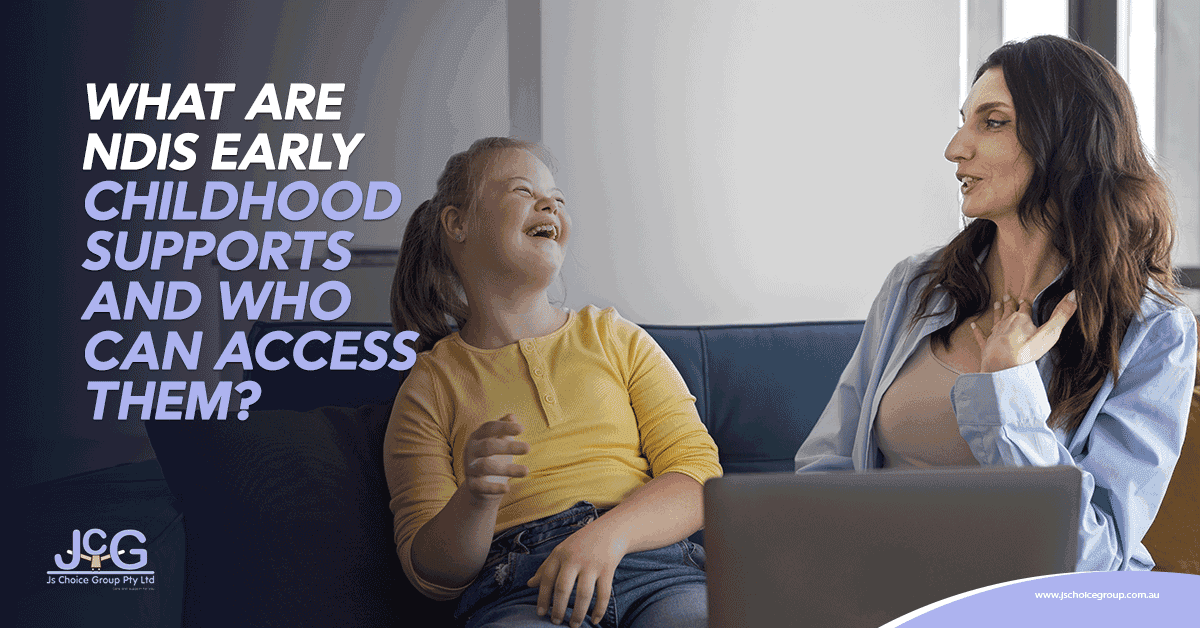
The NDIS early childhood approach is how the scheme supports children younger than 9 and their families. It helps children younger than 6 with developmental delay, or children younger than 9 with disability, and their families to access the right support when they need it.
What makes this approach distinct is its emphasis on early action. Rather than waiting for a diagnosis, a completed assessment, or a formal NDIS plan before providing help, the early childhood approach connects families with an Early Childhood Partner, a local, funded organisation that can begin providing information, referrals, and short-term supports almost immediately.
The approach was developed based on evidence-based research with the help of leading experts in early childhood intervention. It supports best practice because it helps the child and family to build their capacity and supports greater inclusion in community and everyday settings, meaning each child is provided with opportunities to grow and learn.
The philosophy behind it is straightforward: give children and their families the right supports early, and you give them the best possible start in life.
Who Can Access NDIS Early Childhood Support?
Children Under 6 With Developmental Delay
Children younger than 6 do not need a diagnosis to get support through the early childhood approach where there are concerns about their development. This is an important distinction, many families assume they need a confirmed diagnosis before accessing any NDIS support. For children under 6, concerns about developmental progress alone are enough to make contact with an Early Childhood Partner and begin receiving support.
Children Under 9 With Disability
Children aged 6 to 8 with a confirmed or suspected disability can also access the early childhood approach. Under the early childhood approach, an early childhood partner provides timely support to ensure that the child and family are able to access the right level of supports they need.
To qualify for a full NDIS plan, children must meet the standard NDIS eligibility requirements: the child must have a physical, intellectual, cognitive, neurological, visual, hearing or psychosocial impairment that substantially reduces their functional capacity in one or more areas, including mobility, communication, social interaction, self-management, learning and self-care.
Residency Requirements
As with all NDIS access, the child must be an Australian citizen, a permanent resident, or hold a Protected Special Category Visa, and must live in Australia.
What Does an Early Childhood Partner Actually Do?
When a family first contacts the NDIS about a child under 9, they will be connected to an early childhood partner. Early Childhood Partners are local organisations funded by the NDIA to deliver the early childhood approach in communities across Australia.
Your early childhood partner will provide you with information, connect you and your child with the most appropriate supports in your area, such as the community health centre, educational setting and playgroup, provide some short-term early intervention where it has been identified as the most appropriate support, and help you to request NDIS access if your child requires longer-term early childhood intervention supports.
In practical terms, an Early Childhood Partner can:
Meet with your family to understand your child's needs and goals
Connect you with local therapy services, playgroups, and community programs
Deliver short-term early intervention supports directly
Guide you through the NDIS application process if longer-term funding is needed
Help develop your child's first NDIS plan if they become a participant
Importantly, independent assessments will not be used to determine eligibility and budgets for young children. Early childhood partners continue to tailor support to your child's individual needs and circumstances.
What Types of Support Can the NDIS Fund for Young Children?
Once a child becomes an NDIS participant, their plan can fund a wide range of early childhood supports. These typically fall across the Core Supports and Capacity Building categories and include:
Early Childhood Intervention Therapy — Speech pathology, occupational therapy, physiotherapy, and psychology delivered specifically to build developmental skills and address functional delays.
Behaviour Support — Strategies and specialist support for children whose behaviour significantly impacts their ability to participate in daily life, learning, and social interaction.
Assistive Technology and Equipment — Communication devices, mobility aids, specialised seating, and other tools that help children participate in everyday activities.
Daily Personal Activities — Support with self-care tasks that a child cannot manage independently due to their disability.
Increased Social and Community Participation — Supports to help children access childcare, playgroups, recreational activities, and community settings alongside their peers.
Capacity Building for Carers and Families — Programs and supports that build parents' and carers' skills and confidence in supporting their child's development at home.
The early childhood approach gives families information about best-practice early childhood intervention support and how they can help their child, increases their confidence and capacity to manage and respond to their child's support needs, and increases the child's inclusion and participation in mainstream and community settings like childcare or recreation.
What Evidence Is Needed to Apply for a Child's NDIS Plan?
To allow the NDIA to determine whether your child meets the early intervention or developmental delay requirements, you will need to provide evidence of your child's permanent disability or developmental delay to support their access request. This includes information on what your child's condition is, how long it will last and its impact on their life.
You can provide evidence by having your child's treating doctor or specialist complete the Professional's Report section of the Access Request Form, the NDIS Supporting Evidence Form, or you can provide the same information in a different format, such as copies of existing assessments and reports.
Some conditions automatically qualify without further assessment. If your child has a condition already identified as always resulting in permanent impairment and substantially reduced functional capacity, or as always benefiting from early intervention, then the NDIA does not require any further information. A list of these conditions can be found in the Operational Guidelines List D.
For families in Melbourne, your Early Childhood Partner can sit with you through this process, helping you gather the right evidence and complete the application correctly.
The 2026 Thriving Kids Programme: What Melbourne Families Need to Know
This is perhaps the most important change to early childhood disability support in a generation. Thriving Kids will help children aged 8 and under with developmental needs get support earlier, using local services, starting from 1 October 2026. Children with higher support needs will still get help through the NDIS.
Governments have committed to jointly contribute $4 billion over 5 years to implement the first phase of Foundational Supports, known as Thriving Kids. This investment will support children aged 8 and under with developmental delay and/or autism with low to moderate support needs, and their families, carers and kin.
The intent is to deliver faster, more accessible support to children with mild to moderate needs, through schools, childcare centres, and community health services, without requiring families to navigate a full NDIS application.
Critically, for families already on the NDIS: children aged 0–8 who are already on the NDIS can stay on the NDIS under the current rules. Children aged 0–8 who are identified as having developmental delay or disability can still access the NDIS under the current rules.
Children with permanent and significant disability and children aged 8 and under with developmental delay and/or autism who have substantially reduced functional capacity, high support needs, will remain eligible for the NDIS, subject to usual arrangements.
In short: if your child has high support needs, the NDIS remains their pathway. Thriving Kids creates a new, additional layer of support for children with lower-level needs who may not have qualified for the NDIS under previous arrangements.
How to Get Started in Melbourne
If you are concerned about your child's development or have recently received a disability diagnosis, here are your practical next steps:
Contact an Early Childhood Partner — Find your local partner through the NDIS website's partner map, or call the NDIA on 1800 800 110
Request an initial meeting — Your Early Childhood Partner will meet with your family at no cost to assess your child's needs and connect you with local supports
Gather evidence — If an NDIS application is recommended, your Early Childhood Partner will help you collect the right professional reports and documentation
Develop a plan — If your child meets the eligibility criteria to become an NDIS participant, your early childhood partner or NDIS planner will use information gathered about goals, assessments, and connections with community and mainstream support to help create your child's NDIS plan.
Begin accessing supports — Once a plan is in place, you can engage registered NDIS providers to begin delivering funded supports
You do not need to have everything figured out before making that first call. Early Childhood Partners are specifically trained to guide families through the uncertainty of this process.
How JS Choice Group Supports Families in Melbourne
At JS Choice Group, we understand that navigating the NDIS as a parent or carer of a young child with disability can feel overwhelming. We are a fully registered NDIS provider based in Point Cook, with deep experience supporting children and families across Melbourne's Western and Northern suburbs.
Our team has specialist experience with conditions common in early childhood NDIS plans, including autism spectrum disorder, ADHD, Pathological Demand Avoidance, developmental delay, and intellectual disability. We take a neuro-affirming, family-centred approach that respects your child as an individual and supports your whole family, not just the participant.
Our services relevant to early childhood participants and their families include:
Assistance with Daily Life — Practical support with personal care and daily routines
Allied Health Services — Therapy support aligned with your child's NDIS plan goals
Social & Community Participation — Building inclusion through community connection
Group & Centre Activities — Structured, skills-building programs in a supportive group environment
Transport Assistance — Reliable travel to therapy, school, and community activities
Emergency Respite — Flexible family relief when carers need a break
We also offer free consultations for families new to the NDIS, helping you understand your child's plan, your options as a family, and how to get the most out of early childhood support. Book your free consultation here.
Frequently Asked Questions
Does my child need a formal diagnosis to access early childhood NDIS support?
Not necessarily. Children under 6 can access early childhood support based on developmental concerns alone, without a confirmed diagnosis. An Early Childhood Partner can begin providing information and short-term support right away.
What happens when my child turns 9?
At age 9, the early childhood approach transitions and the child moves to the standard NDIS pathway, supported by a Local Area Coordinator. Your current NDIS plan and support continue, the transition is managed with support to ensure continuity of care.
Will the Thriving Kids changes affect my child's current NDIS plan?
If your child is already on the NDIS, their existing plan and eligibility are protected under current rules. Changes under Thriving Kids apply primarily to new applicants with low to moderate support needs from October 2026 onward.
Can parents or carers receive support through an early childhood NDIS plan?
Yes. Capacity building supports for families and carers, building skills, knowledge, and confidence to support a child at home, can be funded within an early childhood NDIS plan.
Ready to Take the Next Step for Your Child?
Early intervention works. The evidence is clear, the sooner a child receives appropriate support, the better their long-term outcomes. If you have concerns about your child's development or have recently received a diagnosis, do not wait.