For many people living with disability, one of the greatest barriers to a fulfilling life is not a lack of ability. It is a lack of access. Access to social activities, community events, recreational programs, and the everyday moments of connection that most people take for granted.
Social and community participation is one of the most important support categories in the NDIS, and it exists specifically to address this. If you are an NDIS participant in Melbourne and are wondering what this funding covers and how to use it, JS Choice Group can help you get started.
What Does Social and Community Participation Mean in the NDIS?
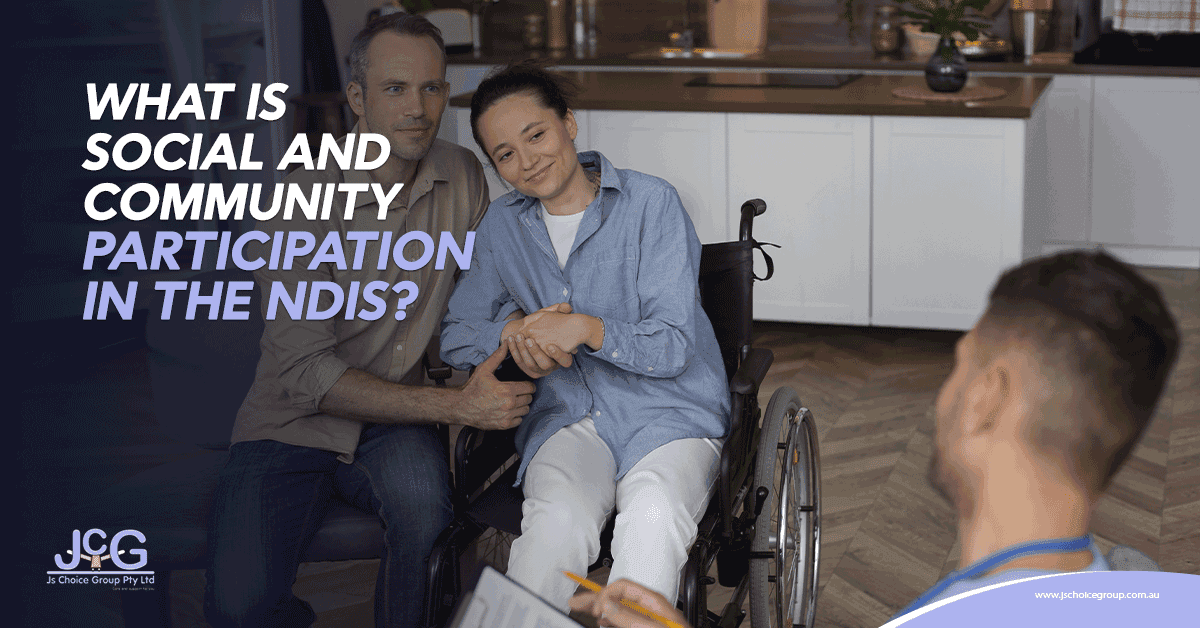
Social and community participation refers to supports that help NDIS participants engage in activities outside their home. These are activities that connect participants with other people, build skills, and support a more independent and fulfilling life.
It covers a wide spectrum. Going to a local sporting club, attending a cultural event, joining a community group, visiting a library, or simply having support to spend time with friends all fall within this category. The key is that the activity connects you to community life in a way that is meaningful to you and your goals.
Participants with disability are twice as likely to experience social isolation compared to those without disability. The NDIS directly addresses this through funded community participation supports, recognising that belonging is not a luxury. It is a fundamental part of wellbeing.
How Is It Funded in an NDIS Plan?
Social and community participation funding sits across two budget categories in an NDIS plan.
The first is Core Supports under Support Category 04, formally known as Assistance with Social and Community Participation. This funds support worker time to help you attend and participate in activities. This includes travel to and from the activity, assistance during the activity itself, and any additional support needed based on your disability-related needs.
The second is Capacity Building, specifically under Increased Social and Community Participation. This funds structured skill-building programs designed to help you participate more independently in community life over time. Think of it this way: Core Supports helps you participate now, while Capacity Building invests in your ability to participate more independently in the future.
Both can be active in a single plan, and many participants benefit from using both together.
What Activities Can Be Funded?
The range of activities covered is broader than many participants realise. The NDIS can fund support for activities including:
Attending sporting clubs, classes, or recreational groups
Visiting community centres, libraries, or cultural events
Joining hobby groups, art classes, or music programs
Volunteering in the local community
Participating in religious or cultural events
Social outings with peers or support groups
Group programs run by registered NDIS providers
It is worth noting what the NDIS does not cover under this category. Membership fees, entry costs, uniforms, and equipment are everyday costs that all participants pay themselves. The NDIS funds the support worker assistance that enables you to attend and participate, not the activity costs themselves.
One-on-One vs Group Support
Community participation supports can be delivered in two ways: individually or in a group setting.
One-on-one support means a dedicated support worker assists you personally throughout the activity. This is well-suited for participants who need a higher level of support, are building confidence in new environments, or have specific communication or medical needs.
Group support means a support worker assists multiple participants at the same time, typically in a structured group program or centre-based activity. Group programs are cost-effective because the cost of the support worker is shared across participants, meaning your plan funding goes further. Many participants also find group settings particularly valuable for building social skills and forming friendships.
JS Choice Group's group and centre activities are designed with both skill-building and genuine social connection in mind, giving participants across Melbourne a supported pathway into community life.
Why Community Participation Matters Beyond the Activity
It is easy to think of community participation simply as "going out and doing things." But the impact of this support runs much deeper than that.
Consistent community participation builds confidence. Over time, participants who receive well-designed community access support often require less direct assistance as their skills and independence grow. A participant who once needed one-on-one support to attend a community group may, with time, be able to attend independently. That progression is not accidental. It is the result of thoughtful, goal-directed support.
Community participation also directly supports mental health. Connection, purpose, and belonging are protective factors against anxiety and depression. For participants living with psychosocial disabilities in particular, regular community engagement is often as important to their wellbeing as any clinical intervention.
It supports the development of practical skills too. Navigating public transport, managing money, communicating with new people, and handling unfamiliar environments are all skills that get practised and strengthened through regular community participation.
What to Look for in a Community Participation Provider
Not all providers approach this support category in the same way. The best providers do more than simply accompany participants to activities. They actively work toward your individual goals, track your progress, and gradually build your independence so that the activity becomes something you can access on your own terms over time.
A quality provider will match you with support workers who understand your communication style, cultural background, and personal interests. Cultural safety matters enormously. In a city as diverse as Melbourne, support that respects your identity makes the difference between a participant who thrives in their community and one who remains on the margins of it.
Consistency is also critical. Regularly working with the same support worker builds trust, reduces the anxiety of new social environments, and means your worker genuinely understands what you need to feel comfortable and confident.
How JS Choice Group Supports Community Participation in Melbourne
At JS Choice Group, we are a fully registered NDIS provider based in Point Cook, delivering social and community participation support across Melbourne's Western and Northern suburbs. We take a participant-led approach to every service we deliver, which means your goals, interests, and cultural identity are at the centre of every support plan.
Our team has specialist experience supporting participants with autism spectrum disorder, ADHD, Pathological Demand Avoidance, psychosocial disabilities, and physical conditions. We understand that community participation looks different for every person, and we design our supports accordingly.
We serve participants across Point Cook, Werribee, Tarneit, Hoppers Crossing, Sunshine, Footscray, Broadmeadows, Melton, and surrounding areas. Support services are available 24 hours a day.
Conclusion
Social and community participation is far more than a line item in an NDIS plan. It is one of the most meaningful ways the scheme invests in a participant's quality of life, mental health, independence, and sense of belonging in their community.
Whether you are new to the NDIS or looking to make better use of existing funding, understanding this support category is an important step. With the right provider and a clear set of goals, community participation can genuinely transform daily life.
If you would like to explore how community participation supports can be built into your NDIS plan, book a free consultation with JS Choice Group today.