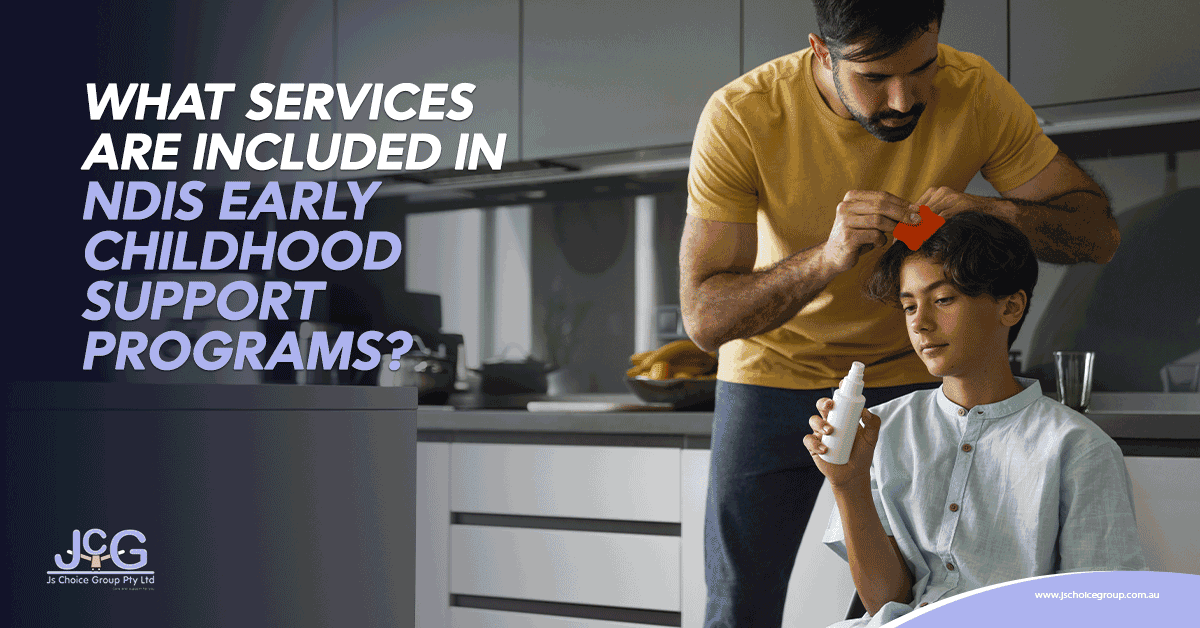
For families navigating the NDIS with a young child, one of the most practical questions is simply: what does the scheme actually pay for? The answer is broader and more flexible than many families expect, and understanding the full range of services available can make a significant difference to how well a child's plan is used.
NDIS early childhood support programs are designed to give children under 9 with disability or developmental delay the best possible start in life. They cover everything from speech pathology and occupational therapy to behaviour support, community participation, and practical assistance at home. They also invest in the capacity of families and carers, because parents who understand their child's needs and know how to respond to them are the most powerful force in any child's development.
This guide breaks down every category of service included in NDIS early childhood support programs, how they are funded, and what the major 2026 changes mean for Melbourne families accessing these supports.
How NDIS Early Childhood Programs Are Structured
Before exploring individual services, it helps to understand how NDIS early childhood support is structured. The early childhood approach helps children younger than 6 with developmental delay, or children younger than 9 with disability, and their families to access the right support when they need it. Children younger than 6 do not need a diagnosis to get support through the early childhood approach where there are concerns about their development.
The entry point to these supports is through an Early Childhood Partner, a local organisation funded by the NDIA to assess children's needs, connect families with community supports, and deliver short-term early intervention directly. For children who require ongoing, longer-term supports, an Early Childhood Partner guides the family through the NDIS application process and helps develop a funded plan.
Once a child has an NDIS plan, the funded supports fall across two main budget categories:
Core Supports — Everyday assistance and community participation
Capacity Building Supports — Therapy, skill-building, and developing independence over time
Both categories apply to early childhood programs, and most children's plans draw on both.
1. Speech Pathology
Speech pathology is one of the most commonly funded services in NDIS early childhood plans, and for good reason. Communication is the foundation of learning, relationships, and independence, and delays in speech and language development are among the most frequent concerns that bring families to the NDIS.
A speech pathologist working with a young NDIS participant may address:
Expressive language — Building vocabulary, sentence structure, and the ability to communicate wants, needs, and ideas
Receptive language — Understanding spoken language, following instructions, and processing what others say
Speech clarity — Improving articulation so that speech can be understood by people outside the immediate family
Social communication — Turn-taking in conversation, understanding non-verbal cues, and initiating interaction with peers
Augmentative and Alternative Communication (AAC) — Introducing communication tools such as picture boards, communication devices, or sign language for children who are non-speaking or minimally verbal
Literacy foundations — Supporting phonological awareness and early reading skills
Feeding and swallowing — For children with difficulties eating safely due to oral motor challenges
New Medicare Allied Health items for speech pathology have been announced to support speech, language, literacy, as well as the use of signs, symbols and gestures to support kids to communicate and build relationships. These new Medicare items, launching alongside Thriving Kids in 2026, will provide additional access pathways for families outside the NDIS.
JS Choice Group's allied health services coordinate directly with speech pathology teams to ensure therapy goals are reinforced through everyday support, not just in weekly clinic sessions.
2. Occupational Therapy
Occupational therapy (OT) addresses the practical, everyday "occupations" of childhood, self-care, play, learning, and social participation. For children with developmental delays, an OT assesses how the child's disability or delay affects their ability to engage in these activities, then develops targeted strategies and interventions.
NDIS-funded OT for young children typically includes:
Fine motor development — Pencil grip, scissors, threading beads, self-feeding with cutlery, and managing fastenings on clothing
Gross motor skills — Balance, coordination, climbing, running, and physical play
Sensory processing — Helping children who are over or under-sensitive to sensory experiences — textures, sounds, light, movement — to participate more comfortably in daily life
Self-care skills — Dressing, toileting, bathing, and managing daily routines with increasing independence
Play skills — Developing purposeful, imaginative, and social play
Handwriting readiness — Building the foundations for written communication before school
New Medicare bulk-billed occupational therapy items have been announced to strengthen play skills, fine and gross motor skills, concentration, and self-regulation.
An OT's involvement extends beyond direct sessions with the child. A quality OT works closely with parents and carers, providing strategies for home, and with educators in childcare and kindergarten settings, ensuring supports are embedded into the child's full daily environment.
3. Physiotherapy
Where a child's developmental delay affects their physical development, delayed walking, low muscle tone, poor coordination, or limited strength, physiotherapy provides movement-based intervention to build the physical foundations that everything else depends on.
NDIS-funded physiotherapy for young children may include:
Targeted exercise programs to build core strength, muscle tone, and balance
Gait training, supporting children to develop a safe, efficient walking pattern
Management of conditions affecting posture and physical development, such as hypotonia or cerebral palsy
Hydrotherapy, water-based therapy that can be especially effective for children with physical conditions
Advice on adaptive equipment, specialised prams, seating systems, orthotics, and mobility aids
Strategies and exercises for parents and carers to implement during daily routines
Physiotherapy in early childhood is a preventative investment. Building physical capacity early reduces the risk of secondary complications, joint problems, postural issues, fatigue, and gives children a stronger physical platform for school participation and active community life.
4. Psychology and Behaviour Support
For children experiencing emotional and behavioural challenges related to their developmental delay or disability, psychology and behaviour support are critical components of an early childhood NDIS program.
Psychology services | Positive Behaviour Support (PBS) |
Psychology services fund psychological assessments, individual therapy, and strategies for managing anxiety, emotional dysregulation, and behavioural difficulties. For young children, psychological support is often delivered through play-based therapy, a developmentally appropriate approach that meets children where they are. | Positive Behaviour Support (PBS) is a specialist NDIS-funded service for children whose behaviour causes significant harm or risk to themselves or others. A behaviour support practitioner works with the child, family, and educators to understand the reasons behind the behaviour and develop a personalised behaviour support plan that improves quality of life, without resorting to restrictive practices. Positive Behaviour Support involves functional behaviour assessment and tailored NDIS Positive Behaviour Support plans, practical strategies, and coaching for caregivers and educators. This is particularly relevant for children with autism spectrum disorder, ADHD, and Pathological Demand Avoidance, conditions where behavioural presentations are often misunderstood and mismanaged without specialist input. |
5. Assistive Technology and Equipment
The NDIS funds a wide range of assistive technology and equipment for young children, tools that directly enable participation in daily life, learning, and communication. Early childhood AT funding may include:
Communication devices and AAC tools — Speech generating devices, eye gaze technology, tablet-based communication apps
Specialised seating and positioning equipment — Custom wheelchairs, supportive seating for children with physical conditions
Mobility aids — Walkers, standing frames, and adaptive equipment for children developing mobility skills
Sensory equipment — Tools to support self-regulation, such as weighted blankets, noise-cancelling headphones, and sensory aids
Continence aids — For children with continence needs beyond the typical developmental age
Home modifications — Ramps, bathroom modifications, and safety equipment to make the home environment accessible and safe
Assistive technology recommendations are typically made by an occupational therapist or other allied health professional as part of their assessment, and are then funded through the Capital Supports budget within the child's NDIS plan.
6. Early Childhood Education and Care (ECEC) Supports
Inclusion in mainstream early childhood education, childcare, kindergarten, preschool, is itself a powerful form of early intervention. When a child with developmental delay is supported to participate in early childhood education alongside their typically developing peers, they benefit from rich learning opportunities, social modelling, and the structured daily routines that build independence and school readiness.
NDIS funding can support inclusion in ECEC settings through:
Support workers in educational settings — A trained support person accompanying a child to childcare or kindergarten to facilitate participation
Therapy in educational settings — Allied health professionals visiting the childcare or kindergarten setting to deliver therapy and coach educators
Educator capacity building — Funding to help childcare educators understand and respond effectively to a child's needs
This "natural environment" model of early intervention, delivering supports in the places where children live and learn, rather than exclusively in clinical settings, is considered best practice and is strongly endorsed by the NDIS Quality and Safeguards Commission.
7. Daily Personal Activities and Home Support
For some young children with significant disability, NDIS Core Supports fund practical assistance with personal care and daily living activities. This may include:
Assistance with bathing, dressing, and grooming
Support with mealtimes, including for children with feeding difficulties
Overnight support for children with complex needs requiring supervision during the night
In-home support to assist families in managing the daily care demands of a child with high support needs
This type of support is particularly important for families where the daily care burden is significant, and where consistent, reliable in-home support makes the difference between a family that copes and one that reaches crisis point.
JS Choice Group's assistance with daily life delivers practical home support with a genuine focus on building the child's own independence over time, not creating long-term reliance.
8. Social and Community Participation
Children with disability and developmental delay face real barriers to social participation, which matters enormously for their development. Social learning, friendship, and community belonging are not optional extras in childhood. They are fundamental to healthy development across cognitive, emotional, and communicative domains.
NDIS early childhood plans can fund:
Support to access playgroups, recreational activities, and community events
Assistance to participate in cultural, religious, or family community activities
Social skills programs and supported play opportunities
Group programs designed specifically for children with similar needs
JS Choice Group's social and community participation support helps young participants across Melbourne connect with the community activities and peer relationships that support healthy development.
9. Family Capacity Building and Carer Support
One of the most distinctive, and most important, features of NDIS early childhood support programs is their explicit investment in families. Parents and carers are not simply recipients of a service. They are the most important people in a child's development, and equipping them with knowledge, skills, and strategies multiplies the impact of every funded therapy session.
NDIS Capacity Building funding for families and carers may include:
Parent coaching and training programs — Delivered by therapists, these programs teach parents practical strategies for supporting their child's development in everyday routines
Carer wellbeing supports — Recognising that caring for a child with disability is demanding, some plans include supports to help carers maintain their own wellbeing and resilience
Sibling and family supports — Programs that help siblings and extended family understand a child's disability and participate meaningfully in their support
JS Choice Group's emergency respite services provide Melbourne families with flexible, short-notice relief, ensuring carers can take a necessary break without compromising their child's care.
10. Support Coordination for Early Childhood Plans
For families navigating a child's first NDIS plan, support coordination provides the guidance and practical assistance needed to make the plan work in real life. A support coordinator helps families to:
Understand what each funding category covers and how to use it effectively
Research and connect with appropriate service providers in their area
Set up service agreements and ensure providers are delivering on their commitments
Prepare for plan reviews and document evidence of a child's progress and changing needs
Navigate the broader system, connecting with schools, health services, and community organisations
Early childhood NDIS plans can be complex, particularly for children with multiple support needs across several disability types. Support coordination ensures no funding goes unused and no service falls through the gaps.
The 2026 Changes: What Melbourne Families Need to Know
Australia's early childhood support landscape is undergoing significant change in 2026. Thriving Kids will establish a national system of early childhood supports delivered through mainstream and community services, including GPs, maternal and child health, early education, schools, and playgroups.
The initiative is built on four key pillars: Early Identification, a national push to spot developmental issues sooner; Information Access, a centralised navigation system for parents to find local support without needing a diagnosis first; Parental Skill Building, empowering families through funded workshops and guidance; and Targeted Support, direct access to allied health professionals without the need for an NDIS plan.
For Melbourne families currently on the NDIS, children aged 8 and under enrolled in the NDIS prior to 1 January 2028 will be subject to reassessment under the eligibility criteria in place prior to 1 January 2028. In practical terms, this means existing NDIS plans and supports are protected until at least 2028, families do not need to panic about immediate changes to their child's plan.
Children with high support needs will continue to access the NDIS regardless of the Thriving Kids rollout.
Not sure how the 2026 changes affect your child's current plan? The team at JS Choice Group can walk you through what is changing and how to prepare.
How JS Choice Group Supports Early Childhood Participants in Melbourne
JS Choice Group is a fully registered NDIS provider based in Point Cook, delivering specialist early childhood support across Melbourne's Western and Northern suburbs. We have deep experience supporting young children with autism spectrum disorder, ADHD, Pathological Demand Avoidance, developmental delay, and intellectual disability, and we take a neuro-affirming, family-centred approach that respects every child as an individual.
Our early childhood NDIS services include:
Assistance with Daily Life — Practical daily living support that builds independence step by step
Allied Health Services — Therapy support integrated into your child's everyday environment
Social & Community Participation — Supporting children to connect with their community and peers
Group & Centre Activities — Structured programs that build skills, friendships, and confidence
Transport Assistance — Reliable, safe travel to therapy, childcare, school, and activities
Emergency Respite — Flexible family relief when carers need support
We offer free consultations for families at every stage of the NDIS journey, whether you are applying for the first time or looking for a provider who truly understands your child. Book your free consultation here.
We serve families across Point Cook, Werribee, Tarneit, Hoppers Crossing, Sunshine, Footscray, Broadmeadows, Melton, and surrounding suburbs. Support services available 24 hours a day.
Frequently Asked Questions
Does my child need a formal diagnosis to access early childhood NDIS services?
No, not for children under 6. Developmental concerns alone are sufficient to connect with an Early Childhood Partner and begin accessing supports. For children aged 6 to 8, a confirmed or suspected disability is required.
Can my child access multiple therapy types within a single NDIS plan?
Yes. Many early childhood plans fund a combination of speech pathology, OT, physiotherapy, and psychology. The mix of services is determined by your child's individual needs and the goals set in their plan.
What if my child's needs change between plan reviews?
You can request an unscheduled plan review at any time if your child's circumstances change significantly. Your provider or Local Area Coordinator can help you document the change in need and submit a review request to the NDIA.
How do I find a registered NDIS provider for early childhood supports in Melbourne's western suburbs?
Contact JS Choice Group directly, we are based in Point Cook and specifically serve the communities of Melbourne's western and northern suburbs. Book a free consultation or call us on 1300 JS CHOICE.
Ready to Explore Your Child's NDIS Options?
Understanding what services are available is the first step to making sure your child's NDIS plan is working as hard as it possibly can for them.