

Assist Life Stage Transition NDIS support is a funded Capacity Building category that helps participants navigate major life changes with the right planning and practical support in place.
If you have seen this term in your plan and are not sure what it means, you are not alone. Whether it is leaving school, moving into a new home, starting work, or transitioning from hospital, knowing how to use this funding well can make a real difference at the moments that matter most.
Life does not stay still. For NDIS participants, significant changes such as finishing school, moving into a new home, or starting a job can be exciting and overwhelming at the same time.
This guide gives you a clear, practical answer on what assist life stage transition NDIS funding covers and how to access it.
How Assist Life Stage Transition NDIS Support Works
Assist Life Stage Transition NDIS support sits under Support Category 10 within your Capacity Building budget. It is designed to help participants move through significant life changes with the right planning, coordination, and practical support in place.
The core purpose is straightforward. Major transitions carry real risks for people with disability. Without the right support, a move from school to adult life, from hospital to home, or from one living arrangement to another can lead to loss of skills, social isolation, or a breakdown in supports that have been working well.
The assist life stage transition NDIS category addresses this by ensuring participants have access to structured planning and transition support at the moments when it matters most.
What Life Transitions Does This Support Cover?
The assist life stage transition NDIS category is broader than many participants realise. It covers a range of significant changes across a person's life, not just the transition from school.
School to post-school life is the most common transition supported through the assist life stage transition NDIS category. This includes the final years of school and the period immediately following, where young adults with disability are moving into employment, further education, or supported adult life.
Hospital to home transitions are also supported. When a participant has been in hospital for an extended period and needs structured support to return safely to their home environment, this funding can help coordinate that process.
Moving into new accommodation, including moving out of the family home for the first time, transitioning into supported independent living, or moving into a new community, is covered where the change is significant and planned support is needed.
Entering or re-entering employment or education is another key transition. For participants who are moving into paid work, vocational training, or further study after a period of not being in employment or education, transition support helps them build confidence and the practical skills needed.
Leaving the justice system is also a recognised life stage transition the NDIS can support, where the participant has a relevant disability and needs structured support to transition back into community life.
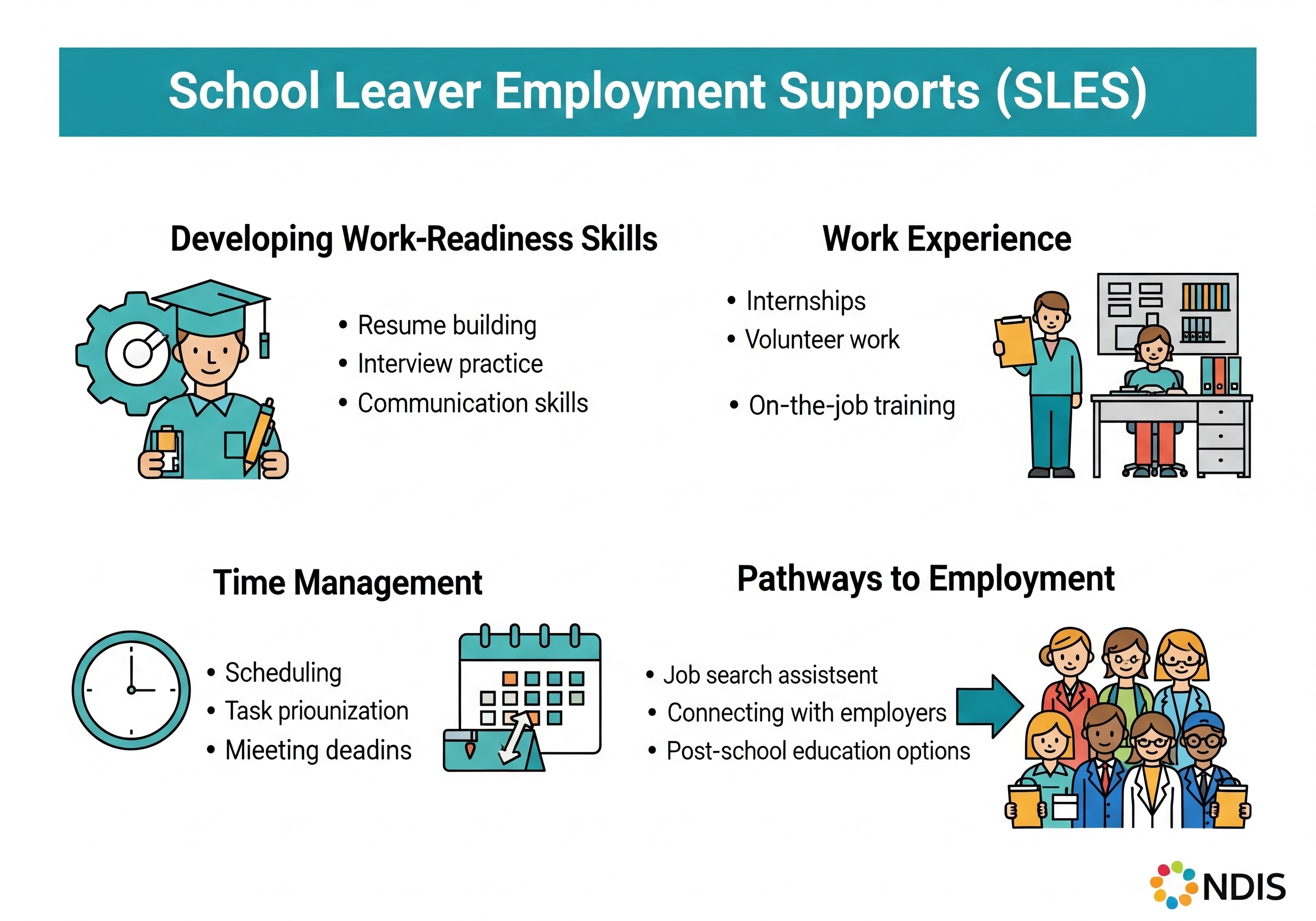
School Leaver Employment Supports (SLES)
One of the most significant and specific programs within the assist life stage transition NDIS category is School Leaver Employment Supports, commonly known as SLES.
SLES is designed for young NDIS participants in their final year of school and for up to two years after leaving school. The purpose is to help young people develop the work-readiness skills and practical experience they need to move toward employment.
SLES support can include:
Building work readiness skills such as time management, communication, and following workplace routines
Exploring different types of work and industries through work experience
Learning practical skills relevant to specific job roles or sectors
Developing travel and transport independence to get to and from work
Building social skills relevant to workplace environments
Connecting with job training programs and supported employment pathways
SLES is not a job placement service. It is a capacity-building program that gives school leavers the foundation they need to take the next steps toward employment with confidence.
For families of young people with ASD, intellectual disability, or other conditions that affect employment readiness, SLES is one of the most impactful forms of assist life stage transition NDIS support available.
Starting early is the key to making the most of it.
Who Is Eligible for Assist Life Stage Transition Support?
Any NDIS participant can potentially access assist life stage transition NDIS funding, provided the transition is significant, directly related to their disability, and the support is considered reasonable and necessary under their plan.
The most common groups accessing this support are:
Young adults leaving school (particularly aged 17 to 22) who need structured support to move into employment, education, or adult community life
Participants of any age transitioning from hospital or residential care back to their home or community
Participants moving into new living arrangements for the first time
Participants re-entering the workforce or education after an absence due to their disability
Participants leaving the justice system who have a relevant disability
The key question the NDIS asks is whether the transition represents a genuine, significant life change and whether targeted support during that transition is likely to produce better long-term outcomes for the participant.
How Is Assisted Life Stage Transition Funded in Your NDIS Plan?
Assist life stage transition NDIS support is funded through your Capacity Building budget, under Support Category 10. Like all Capacity Building funding, it is a dedicated line that cannot be used interchangeably with Core Supports.
Your Capacity Building budget for transition support is listed separately in your plan. The amount is determined at your planning meeting based on the nature and timing of the transition, the evidence provided by your treating team or support coordinator, and the specific goals included in your plan.
The NDIS support categories page on the NDIS website lists all funded categories and the types of supports included under each.
For participants who are not sure whether their plan includes this funding, a Support Coordinator can review the plan and identify whether transition support is already included or whether it needs to be requested at the next review. JS Choice offers support coordination for participants who need help navigating their plan and connecting with the right providers.
How to Get the Most from This Support
Assist life stage transition NDIS funding is time-sensitive by nature. Transitions have windows, and the assist life stage transition NDIS category works best when planning begins early. A school leaver who does not access SLES in the first year after finishing school may lose the momentum that structured early support would have created.
Here are the most practical steps to make this support work effectively.
Start planning early For school-to-adult transitions, the planning should begin in the participant's final two years of school. Request that transition planning be included as a goal in the next plan review and provide evidence of the upcoming transition.
Work with your school and your NDIS planner together Schools often have transition coordinators who can contribute to NDIS planning meetings. Bringing together the school's knowledge and the NDIS plan creates a much stronger foundation for the transition.
Connect with a registered provider early Not all providers offer assist life stage transition NDIS support. Find a registered provider early in the transition period so that support can begin without delay once the plan is in place.
Use daily life support alongside transition support Transition support builds skills and plans the journey. Assistance with Daily Life supports the participant in applying those skills day to day. The two categories work best when used together, particularly for participants moving into more independent living arrangements.
Document progress and goals throughout the transition period Good documentation of what is being achieved during the transition strengthens the case for continued funding at the next plan review. Keep records of skills developed, goals achieved, and any barriers encountered.
How JS Choice Group Can Help
At JS Choice, we support participants through some of the most significant moments of their lives. Whether a young person is leaving school and building toward employment, or an adult is moving into a new living arrangement, we understand that transitions require more than logistics. They require genuine care, experienced guidance, and the right support structure.
Our support coordination team can help you understand whether assist life stage transition NDIS funding is in your plan, connect you with the right providers, and make sure your transition support is working toward real outcomes.
We work with participants and families across Point Cook, Tarneit, Werribee, Hoppers Crossing, Laverton, Craigieburn, Footscray, and Melbourne's wider western and northern suburbs.
Related reading: