
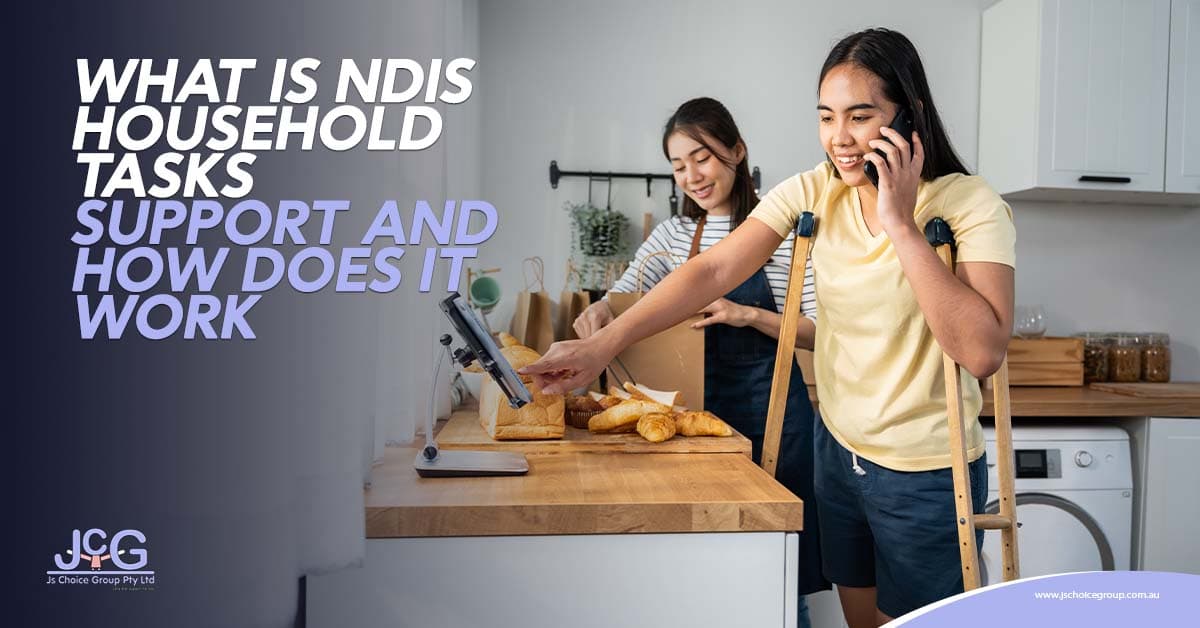
Keeping a home running takes real effort, and for many NDIS participants, it's one of the areas where the right support can make the biggest difference. NDIS household tasks support is one of the most practical and widely-used forms of assistance available under a participant's plan.
Yet many people don't fully understand what NDIS household tasks funding covers, how to access it, or whether they're getting the most from their plan.
This guide walks you through everything you need to know.
Quick Summary: What is NDIS Household Tasks Support?
NDIS Household Tasks support provides funding for an NDIS provider or support worker to assist with domestic chores you cannot perform due to your disability.
Part of the Core Supports, Assistance with Daily Life category, it aims to maintain a clean, safe, and functional home environment, fostering greater independence for participants.
What Does NDIS Household Tasks Support Actually Cover?
NDIS household tasks support, sometimes called domestic assistance, refers to help with the day-to-day tasks involved in running a home. It falls under the Assistance with Daily Life support category, funded through your Core Supports budget.
NDIS Household Tasks Support, or domestic assistance, is funded through your Core Supports budget under the Assistance with Daily Life category. It provides NDIS participants with practical help for home management tasks like cleaning, laundry, and meal preparation.
This support must be genuinely required due to a disability to promote independent living.
The key principle is this: the support must be something you need because of your disability. It's not about general convenience, it's about enabling you to live safely, comfortably, and as independently as possible.
Category | Examples of Covered Tasks | What’s Usually Not Covered |
Cleaning | Vacuuming, mopping, bathrooms, kitchens | Professional steam cleaning, window washing |
Meals | Meal prep, grocery shopping, washing dishes | Cost of food/groceries (ingredients) |
Laundry | Washing, drying, folding, ironing | Dry cleaning services |
Maintenance | Basic tidying, clearing paths | Major home repairs, professional landscaping |
Cleaning and Home Maintenance
Cleaning is one of the most common areas where participants use household task support. This can include vacuuming, mopping, bathroom cleaning, and surface wiping, tasks that may be physically or cognitively difficult to complete without assistance.
Your support worker can help maintain a clean, safe environment in your home. This is particularly important for participants with physical disabilities, chronic fatigue, or conditions that affect mobility or concentration.
Meal Preparation and Laundry
Support with meal preparation covers shopping for groceries, preparing and cooking meals, and ensuring you have access to nutritious food each day. This is especially valuable for participants who find it difficult to stand for extended periods or manage complex multi-step tasks.
Laundry, including washing, drying, and folding clothes, is also covered. Some participants need help with the physical tasks involved; others may benefit from support in managing a routine and keeping on top of it consistently.
Other Domestic Tasks
Depending on your individual plan and goals, household task support can also extend to other domestic activities. This might include decluttering and organising living spaces, changing and laundering bed linen, and basic home tidying.
Yard maintenance is sometimes included where it is directly related to your disability-related need and safety, for example, keeping pathways clear. However, this is assessed individually and is not automatically included in all plans.
Who Is Eligible for NDIS Household Tasks Support?
To receive NDIS household tasks support, you must be an active NDIS participant, and the support must be reasonable and necessary given your disability.
The NDIS does not fund support that a person without a disability would typically purchase themselves, or that family members would typically provide.
But if your disability genuinely limits your ability to complete household tasks safely or consistently, this support is designed for you.
Participants who commonly access this support include those with:
Physical disabilities affecting mobility, strength, or stamina
Neurological conditions such as acquired brain injury or multiple sclerosis
Psychosocial disabilities including depression, anxiety, or schizophrenia
Intellectual disabilities or cognitive impairments
Autism Spectrum Disorder (ASD) where executive function or sensory factors affect daily tasks
Chronic health conditions that cause fatigue or pain
If you are unsure whether your situation qualifies, speaking with your Support Coordinator or NDIS planner is the best starting point. A registered NDIS provider like JS Choice can also help you understand what your plan does and doesn't cover.
The "Reasonable and Necessary" Criteria for Domestic Help
To get Household Tasks included in your plan, the NDIS evaluates the request against these criteria:
Disability Support: Does the need for a cleaner or cook relate specifically to your disability?
Value for Money: Is the cost of the support reasonable compared to the benefit?
Parental/Informal Support: If you are a child, is this something a parent would normally do? If you live with family, can they reasonably assist?
Goal Alignment: Does this support help you achieve the goals listed in your NDIS plan?
How Is NDIS Household Tasks Support Funded?
This is the section most participants want to clearly understand, and it's simpler than it might seem.
When looking at your budget, you will find Household Tasks under Support Item 01_020_0120_1_1. It is important to check the latest NDIS Price Guide, as rates are capped by the NDIA to ensure participants are charged fairly.
At JS Choice, we always adhere to the current NDIS price limits, ensuring your funding lasts throughout your plan cycle.
NDIS household tasks support is funded through your Core Supports budget, under the Assistance with Daily Life support category (also known as Support Category 01).
Core Supports is the most flexible part of your NDIS plan and can generally be used across the supports within that category.
Agency Managed, Plan Managed, or Self-Managed?
How you access household task support depends on how your NDIS plan is managed:
Agency managed: You access support through registered NDIS providers only. JS Choice is a registered provider, so we can support you under this arrangement.
Plan managed: A plan manager handles invoicing on your behalf. You can access both registered and unregistered providers.
Self-managed: You manage your own funding and can choose any provider.
Regardless of your plan management type, the support you receive must still align with the goals and budgets in your NDIS plan. The NDIS publishes a Support Catalogue and pricing guidance to help participants understand what is claimable.
Never quote a support worker specific dollar amounts from memory, always refer to the current NDIS Support Catalogue for up-to-date pricing.
What to Expect from a Support Worker?
When a JS Choice support worker helps with household tasks, they're not just completing a checklist, they're working with you, at your pace, in your space. Every participant has different preferences, routines, and ways of doing things.
A good support worker respects that. They'll follow your lead on how your home is organised, what products you prefer, and how involved you want to be in each task.
Here's what you can expect from JS Choice support workers:
Punctual, consistent, and respectful of your home environment
Clear communication about what they're doing and why
Support that builds your independence, not dependency
Cultural awareness and sensitivity, particularly important in Melbourne's diverse western suburbs community
Neuro-affirming practice, particularly relevant for participants with ASD, ADHD, or PDA who may have specific sensory needs around their home environment
Over time, a consistent support worker can also help you build your own skills and confidence around household management, so that support reduces as your capacity grows, if that's one of your goals.
How to Access NDIS Household Task Support in Melbourne
If you're in Melbourne's western suburbs, including Point Cook, Tarneit, Werribee, Hoppers Crossing, or surrounding areas, here's how to get started.
Step 1: Check your NDIS plan Look at your Core Supports budget and confirm you have funding allocated under Assistance with Daily Life. If you're not sure, ask your Support Coordinator or plan manager to clarify.
Step 2: Choose a registered NDIS provider For agency-managed participants, this step is essential. For plan-managed or self-managed participants, you have more flexibility, but working with a registered provider like JS Choice for your NDIS household tasks gives you added safeguards around quality and compliance.
Step 3: Have a conversation about your needs A good provider will start with a conversation, not a contract. At JS Choice, we take the time to understand your goals, your home environment, your routines, and any cultural or sensory preferences before we begin.
Step 4: Begin your services Once a Service Agreement is in place, your support can begin. JS Choice offers flexible scheduling to fit around your life, not the other way around.
How JS Choice Group Can Help?
At JS Choice, our Assistance with Daily Life support, including NDIS household tasks support, is built around your goals, your routine, and your preferences, not a standard package.
We work with participants across Point Cook, Tarneit, Werribee, Hoppers Crossing, and Melbourne's wider western and northern suburbs. Our team brings genuine lived experience, cultural responsiveness, and neuro-affirming practice to every service we provide.
If you're ready to explore NDIS household task support, we'd love to have a conversation. You can also submit a free referral and we'll be in touch.