

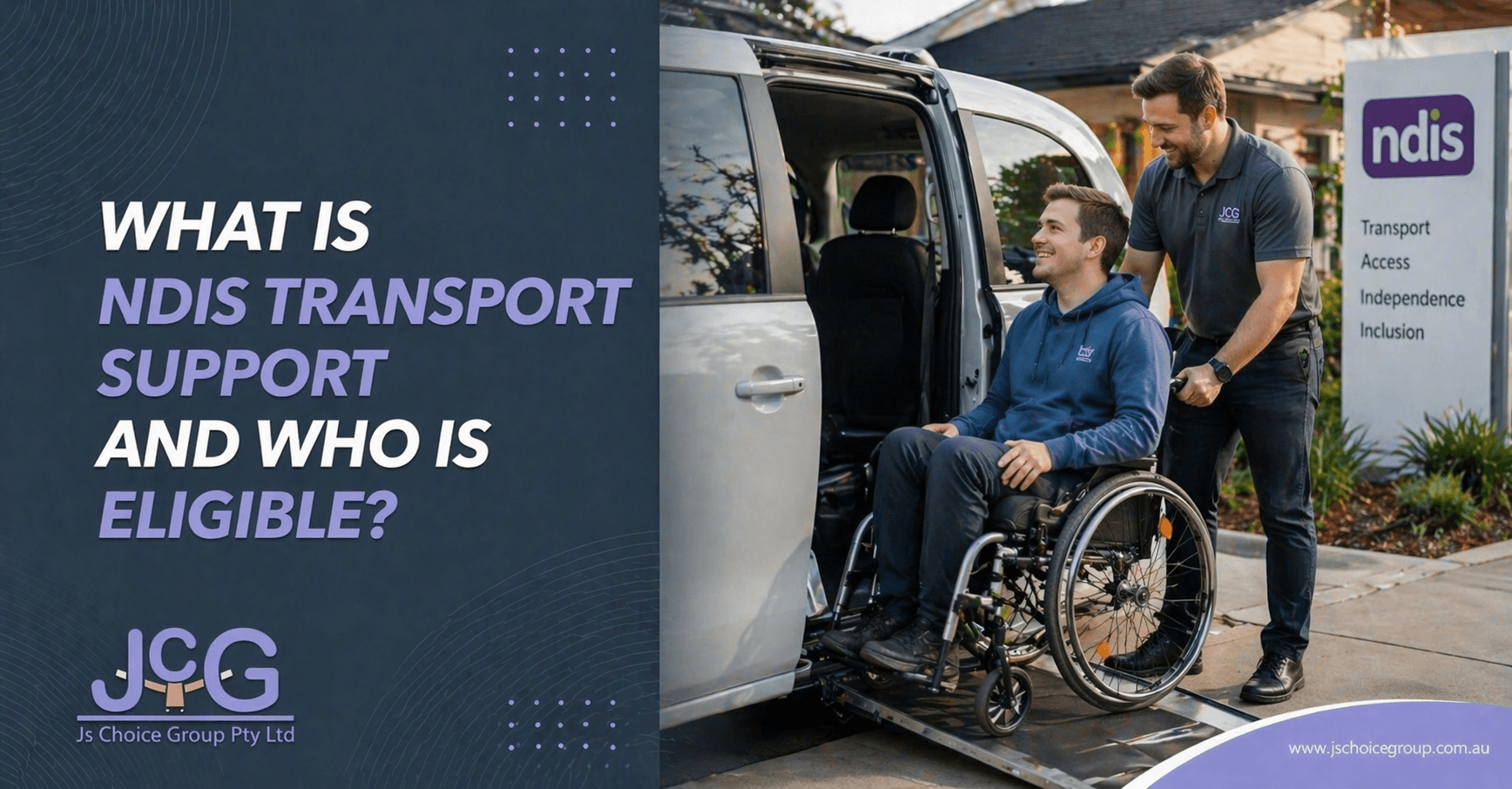
NDIS Transport Support provides financial assistance and practical aid to participants who cannot use public transport independently due to the functional impact of their disability.
Eligibility is specifically for NDIS participants who face substantial difficulty travelling to work, school, or community activities without specialized assistance. In 2026, funding is typically provided in three standard levels, Level 1 ($1,784), Level 2 ($2,676), and Level 3 ($3,456), allocated annually to help cover the costs of taxis, rideshares, or private transport.
Under the NDIS, transport is a Core Support aimed at removing the logistical barriers that prevent individuals from achieving their personal goals. Whether you require a disability support worker to drive you to a social outing or need specialized training to build your travel independence, the NDIS ensures that transport is accessible, safe, and supportive of your autonomy.
The Three Levels of NDIS Transport Funding in 2026
The NDIA (National Disability Insurance Agency) uses a tiered system to determine how much transport funding is included in your plan. These levels are designed to reflect your current lifestyle, such as whether you are working, studying, or engaging in community activities.
Level 1: Basic Support ($1,784 per year)
This level is generally for participants who are not currently working or studying but want to improve their community participation. It provides approximately $68.62 per fortnight, which can be used for occasional trips to see friends, attend local events, or go to the shops.
Level 2: Moderate Support ($2,676 per year)
You may be eligible for Level 2 if you are working or studying part-time (up to 15 hours per week) or attending day programs. This allocation of roughly $102.92 per fortnight makes regular travel to these activities more manageable and predictable.
Level 3: High Support ($3,456 per year)
This level is reserved for participants who work, study, or are actively looking for work for 15 hours or more per week and are unable to use public transport because of their disability. At approximately $132.92 per fortnight, it provides the highest standard of support for those with significant daily travel requirements.
Eligibility: Who Can Access NDIS Transport Support?
To receive specialized transport funding, the support must meet the NDIS "reasonable and necessary" criteria. Eligibility is not based on the lack of a personal car or your location; it is strictly about the functional impact of your disability.
1. Functional Limitations
You are likely eligible if your disability makes it unsafe or extremely difficult to use public transport independently. This might include:
Physical disabilities that make boarding a bus or train difficult.
Sensory or cognitive impairments that make navigating complex routes overwhelming.
Psychosocial disabilities that cause severe anxiety in crowded transit environments.
2. Impact on Goals
The NDIS looks at whether transport barriers are stopping you from reaching your goals. If you cannot access your NDIS personal care services or employment without transport help, the NDIA is more likely to provide funding.
3. Age and Residency
You must be an NDIS participant under the age of 65 and live in Australia as a citizen or permanent resident. Support providers typically help collect the medical evidence and OT (Occupational Therapy) reports needed to prove your eligibility during your planning meeting.
Types of NDIS Transport Assistance Available
Transport support is more than just a fortnightly payment. Depending on your needs, your NDIS funding can be used in several different ways.
Activity-Based Transport
When a disability support worker uses their own car or your vehicle to take you to a community activity, this is called activity-based transport.
Standard Vehicle: Providers typically claim $0.99 per km for running costs.
Modified Vehicle: For wheelchair-accessible vehicles, the rate is higher, currently $2.76 per km.
Labour Costs: You also pay for the worker's time at their standard hourly rate while they are driving you.
Travel Training (Capacity Building)
The NDIS often funds NDIS development and life skills programs that include travel training. This training teaches you how to plan routes, use a Myki or Opal card, and manage the social aspects of public transport so you can eventually travel without a worker.
Vehicle Modifications
If you own a car but need it modified to be accessible, the NDIS can fund these changes under Assistive Technology. This includes installing wheelchair lifts, ramps, or hand controls. While the NDIS does not buy the car itself, they cover the cost of the disability-specific modifications that allow you to use it safely.
Maximizing Your Transport Budget
Managing your transport budget effectively is key to maintaining your independence. Many participants use their funding in combination with state-based schemes, such as the Taxi Transport Subsidy Scheme (TTSS) or the Multi-Purpose Taxi Program (MPTP), to make their NDIS dollars go further.
Fortnightly Payments: If you receive a direct allowance (Levels 1–3), ensure it is used for travel costs that help you reach your goals.
Core Flexibility: If you have a "flexible" Core budget, you may be able to use other categories to pay for a support worker to transport you, even if your specific transport category is low.
Evidence for Reviews: If your circumstances change—for example, if you start a new job—you should update your NDIS support coordination team to request a plan review for a higher level of transport funding.
Frequently Asked Questions
Who is eligible for NDIS in Australia?
To be eligible for the NDIS, you must be under 65 years of age, an Australian citizen or permanent resident, and have a permanent and significant disability that affects your ability to take part in everyday activities.
Does the NDIS cover fuel and car registration?
No. The NDIS does not cover general "day-to-day" living costs that everyone has to pay, regardless of their disability. This includes fuel, car insurance, registration, and general vehicle maintenance.
Can NDIS pay for a support worker to drive my car?
Yes. If you have a support worker assisting you with daily tasks, they can drive your car to take you to appointments or social events. You just need to ensure your insurance covers other drivers and that the arrangements are documented in your service agreement.
How do I know which transport level I am on?
Your transport level is determined during your planning meeting and is listed in your NDIS plan under "Core Supports". If you are working or studying more than 15 hours a week and cannot use public transport, you should be on Level 3.
Conclusion
Reliable transport is often the critical link between living at home and truly being a part of your community. By understanding your eligibility and the different ways you can use your disability transport services, you can ensure your travel needs are fully supported in 2026.
If you are exploring NDIS support options, understanding your plan and available services can help you make informed decisions for your care and independence. For help coordinating these services or finding a suitable provider, learning about NDIS support coordination can be a valuable next step. Whether you are heading to work or a weekend outing, the right transport plan keeps you moving forward with confidence.