

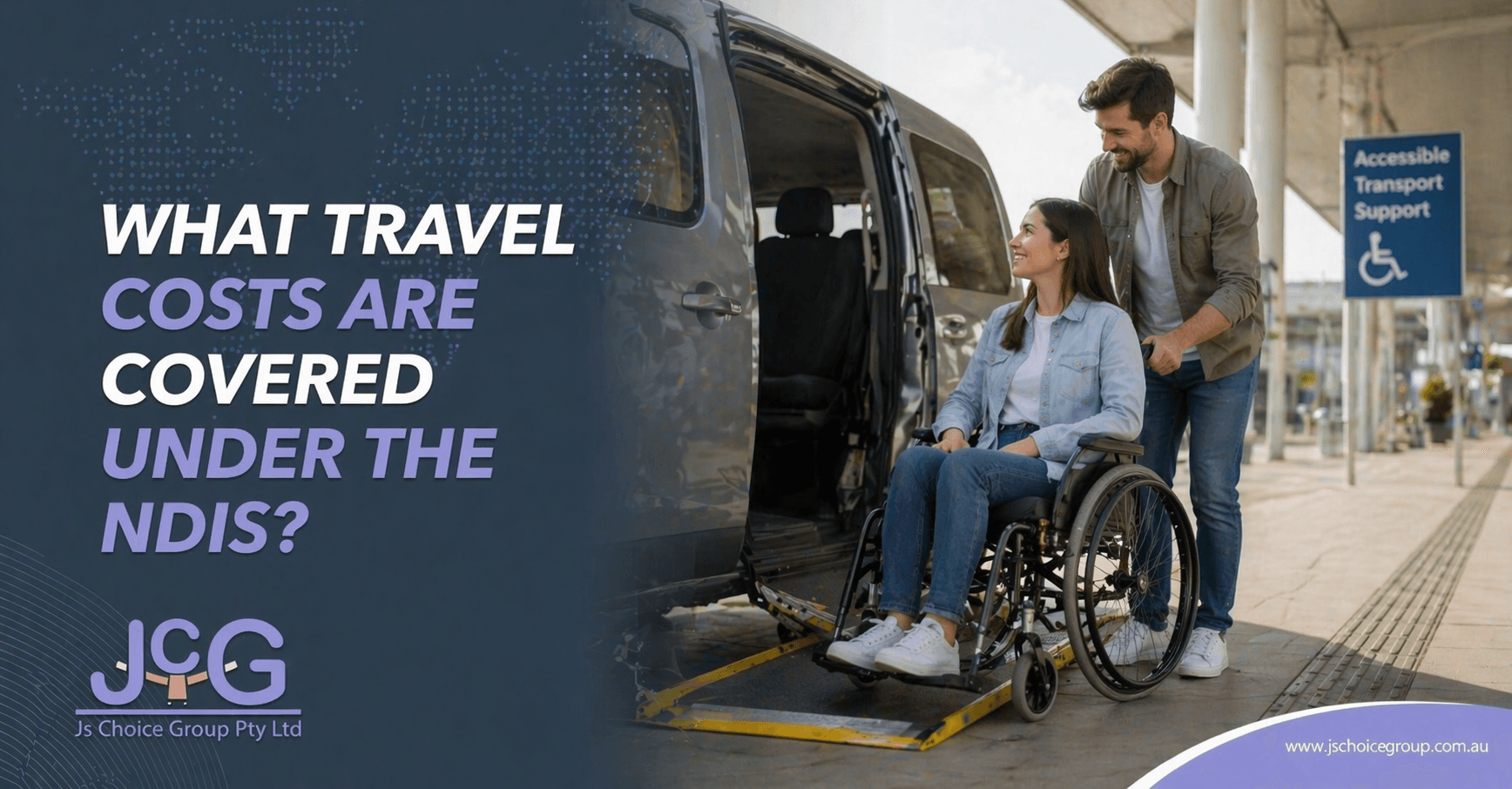
The NDIS covers travel costs that are directly related to a participant's disability and are considered "reasonable and necessary" to achieve their plan goals. This includes recurring transport allowances for participants who cannot use public transport, provider travel fees (labour and distance), activity-based transport for community outings, and vehicle modifications.
In 2026, standard transport funding is tiered into three levels, $1,784, $2,676, and $3,456 per year, depending on how often a participant works or studies. Under the NDIS, travel support is designed to remove the physical and financial barriers that prevent individuals from staying connected to their community.
While the scheme does not cover general lifestyle costs like fuel or car registration for a personal vehicle, it provides a vital safety net for those requiring disability transport services to attend work, therapy, or social activities.
The Three Categories of NDIS Travel Costs
Travel costs under the NDIS are often misunderstood because they are split across different parts of a plan. To understand what you can claim, it is helpful to look at these three main categories:
1. Participant Transport Funding (Recurring)
This is money paid directly to the participant (often fortnightly) to help with the costs of getting around. It is intended for participants who cannot use public transport independently.
As of March 2026, the standard annual levels are:
Level 1 ($1,784/year): For participants not working or studying but looking to improve their community participation.
Level 2 ($2,676/year): For those working or studying part-time (up to 15 hours a week) or attending day programs.
Level 3 ($3,456/year): For participants working, looking for work, or studying at least 15 hours a week.
2. Provider Travel (Labour and Non-Labour)
When a therapist or disability support worker travels to your home to deliver a service, they are entitled to charge for their travel time and distance.
Labour Costs (Travel Time): For support workers, this is charged at their standard hourly rate. For therapists (as of 2025-26), this is capped at 50% of their hourly rate.
Non-Labour Costs (Distance): Providers can charge a per-kilometre rate for their vehicle wear and tear. In 2026, the standard rate is $0.99 per km ($2.76 per km for a modified vehicle).
3. Activity-Based Transport
This occurs when a support worker transports you during a service, for example, driving you from your home to a basketball game or a doctor's appointment. The provider can charge for the kilometres driven (usually $0.99/km) in addition to the hourly rate for the support being provided.
Specialized Travel Supports and Training
The NDIS also invests in your long-term independence through Capacity Building and Capital Supports.
Travel Training
If your goal is to learn how to use buses, trains, or trams independently, the NDIS can fund NDIS development and life skills programs that include travel training. This involves a worker accompanying you on routes to teach you how to use transport apps, purchase fares, and manage safety.
Vehicle Modifications
While the NDIS does not buy cars for participants, it can fund the assistive technology required to make a car accessible. This includes:
Wheelchair lifts or ramps.
Specialized driving controls (e.g., hand accelerators).
Swivel seats for easier transfers.
Support at the Destination
Sometimes the "cost" of travel includes the support needed once you arrive. Your Core Supports budget can fund a worker to stay with you during a community event, providing daily living assistance while you are away from home.
What Is NOT Covered by the NDIS?
To manage your NDIS funding effectively, it is important to know the "excluded" costs that remain your personal responsibility.
Standard Living Expenses: Fuel, oil, and regular car maintenance for your own vehicle.
Registration and Insurance: These are costs every Australian car owner must pay.
Road Tolls and Parking: These are generally considered personal expenses, though they can sometimes be included in a provider's non-labour travel claim if agreed upon in a service agreement.
Travel for Family Members: The NDIS only funds travel for the participant, not for their parents, siblings, or carers.
Pro Tip: Always check your Service Agreement. Providers cannot charge for travel unless it is explicitly agreed upon in writing before the service begins.
Frequently Asked Questions
Who is eligible for NDIS in Australia?
To be eligible for the NDIS, you must be under 65, live in Australia as a citizen or permanent resident, and have a permanent and significant disability that impacts your ability to perform daily activities.
How do I get more transport funding in my plan?
If your travel needs have increased—for example, if you have started a new job or course—you should speak to your NDIS support coordination team to prepare evidence for a plan review.
Can I use my transport allowance for Uber or Taxis?
Yes. Recurring participant transport funding (Levels 1–3) is intended to help you pay for private transport, taxis, or rideshare services when you cannot use public transport.
What are the MMM zone limits for provider travel?
The NDIS uses the Modified Monash Model (MMM) to cap how much travel time a provider can charge. In Metro areas (MMM 1-3), the cap is 30 minutes. In Regional areas (MMM 4-5), it is 60 minutes.
Conclusion
Navigating NDIS travel costs can be complex, but these supports are essential for maintaining your freedom and independence. By understanding the different funding categories, from your fortnightly allowance to provider kilometres, you can ensure you stay mobile and connected in 2026.
If you are exploring NDIS support options, understanding your plan and available services can help you make informed decisions for your care and independence.
For help managing these logistical details, consider how disability transport services can be integrated into your weekly schedule to support your goals. For participants requiring physical assistance while out and about, NDIS personal care services can ensure you have the support you need at every destination.