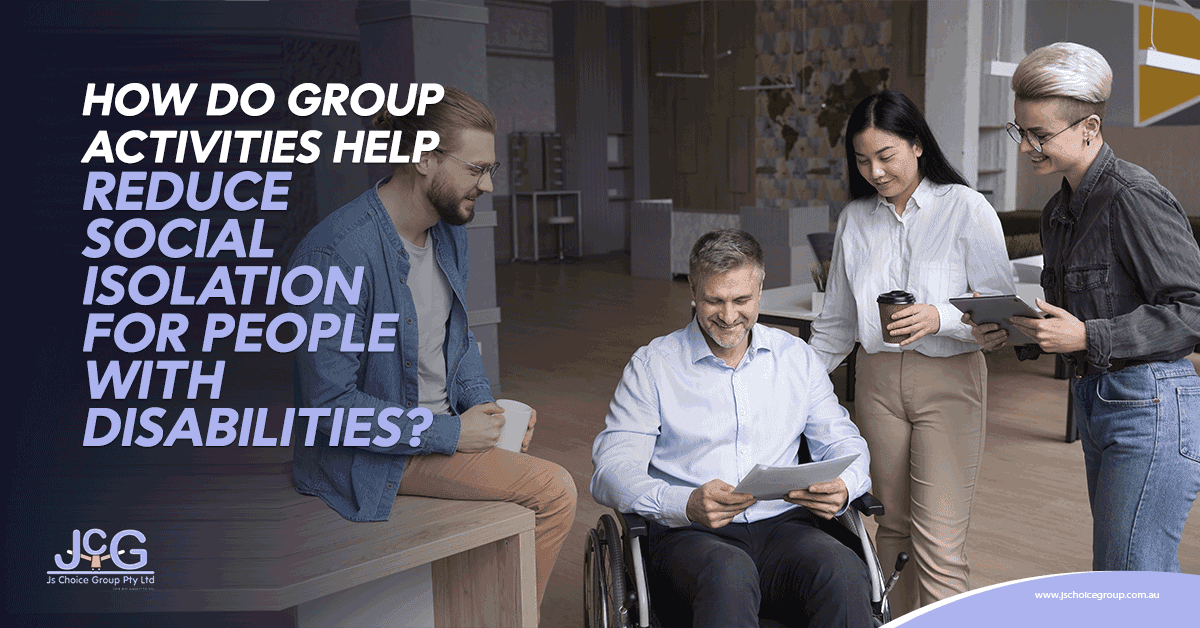
Socialll isolation is one of the most profound, yet often invisible, challenges facing Australians living with disability. It is not just about feeling lonely; it is a critical barrier to personal growth, mental health, and overall quality of life. For NDIS participants in Melbourne, accessing effective Disability Support Services that prioritize community connection is crucial to transforming daily living.
Group activities, funded through the NDIS's social and community participation supports, offer a targeted and powerful solution to this isolation. By creating structured, supportive environments, these programs allow individuals to connect with peers, build practical skills, and develop a lasting sense of belonging.
Understanding Social Isolation
The statistics are sobering: NDIS participants are twice as likely to experience social isolation compared to those without disability. This isolation is not a mere preference for solitude; it is a lack of meaningful connection that negatively impacts health.
Isolation can contribute to:
Increased rates of depression and anxiety.
Cognitive decline and reduced life expectancy.
Lower self-esteem and a limited sense of purpose.
Disability support services Melbourne aim to break down the physical, social, and communicative barriers that enforce this isolation. Group activities serve as a controlled, low-pressure gateway back into community life.
Why Group Settings Are Essential for Building Connection
While one-on-one support is vital for personal care and high-level needs, group activities offer a unique dynamic that is irreplaceable for combating isolation. When a participant joins a group, they shift from being a recipient of a service to an active, contributing member of a shared experience.
Fostering Genuine Peer Relationships
The most significant benefit of group participation is the opportunity to build genuine relationships with peers who share similar experiences and interests.
Shared Identity: Connecting with people who understand the daily realities of disability creates a deep, immediate sense of validation and belonging.
Reciprocal Support: Unlike relationships with support workers, peer friendships involve giving and taking, which is essential for developing a sense of self-worth and independence.
Interest-Driven Engagement: Group programs are often centred around hobbies,such as art, sport, or cooking,ensuring that the foundation for friendship is mutual interest, not just disability.
This is a fundamental aspect of how NDIS support improves quality of life.
Building Confidence Through Scaffolding
Social confidence does not simply appear; it is built through repeated, supported practice in real environments. Group activities provide the perfect environment for this process, often utilizing a technique called 'scaffolding'.
Start with Support: A participant begins with intensive support, with a worker present to model interactions and provide immediate assistance.
Gradual Step-Back: As the participant’s skills and comfort grow, the support worker gradually reduces their involvement, prompting the participant to take the lead.
Achieving Autonomy: Eventually, the participant may be able to attend the activity independently, demonstrating true NDIS independence Melbourne.
This progression proves that group support is an investment in long-term independence, helping the NDIS participant daily living experience become more self-directed. For a deeper look at this process, explore our article, How Do Community Activities Help NDIS Participants Build Confidence?.
The NDIS Framework: Core and Capacity Building
Group supports are funded under the Social and Community Participation category in the NDIS plan. Understanding the funding distinction helps participants maximize their plan.
Core Supports vs. Capacity Building
Core Supports: Funds the support worker time (Assistance with Social and Community Participation) needed to help you attend an activity now.
Capacity Building: Funds structured, goal-directed programs (Increased Social and Community Participation) designed to build skills and lead to greater independence over time.
Group programs under Capacity Building often fall into the specialized category of Innovative Community Participation (ICP). ICP focuses on purposeful engagement,such as adaptive sports or creative workshops,to develop transferable skills like teamwork, communication, and problem-solving. To learn more about this category, read What Are the Benefits of Innovative Community Participation Programs?.
Group support is particularly cost-effective, allowing your NDIS plan funding to stretch further, meaning more opportunities for connection and skill development.
The Mental Health and Purpose Link
Beyond social connections, regular group participation is a powerful protective factor for mental health. For participants living with psychosocial disabilities, this engagement is not just recreational; it is often clinically significant.
Sense of Purpose: Contributing to a group project or a community event, even through volunteering, provides a meaningful role outside of the disability support structure. This purpose builds resilience and stability.
Structure and Routine: Regular group activities create predictable routines that are essential for managing mental health conditions, providing anchor points in the week.
Resilience Building: Dealing with the minor challenges of a social setting,managing anxiety in a new environment or navigating a disagreement,are all low-stakes learning opportunities that build coping skills.
For participants focused on recovery, a specialized form of Disability Support Services called psychosocial recovery coaching can work hand-in-hand with group activities, helping to re-integrate social skills and routines.
Finding the Right Group in Melbourne
In a diverse city like Melbourne, finding the right group support means prioritizing choice, control, and cultural safety. Effective disability support services Melbourne will match participants to groups based on genuine interests and identity.
Look for programs that offer:
Cultural Inclusion: Activities that reflect and honour a participant's cultural and linguistic background, fostering a deeper sense of belonging.
Interest Alignment: Whether it’s adaptive sport, technology skill-building, or a local art class, the activity should genuinely motivate the participant.
Goal Focus: The provider should track progress, ensuring the group activity is actively helping the participant move toward their NDIS goals, particularly relating to NDIS daily life support Melbourne and greater independence.
Conclusion
Group activities are far more than a way to fill time; they are a vital, evidence-based strategy for dismantling the isolation that plagues many people with disabilities. By providing a structured environment for peer connection, skill development, and mental health resilience, these programs deliver tangible and lasting improvements in the NDIS participant daily living experience.
If you or a loved one are looking to leverage NDIS funding to enhance social connection and build NDIS independence Melbourne, exploring quality group programs is the essential next step. JS Choice Group provides participant-led, culturally inclusive Disability Support Services across Melbourne’s Western and Northern suburbs, committed to helping you thrive.
To learn more about maximizing your NDIS plan for community participation, contact our team today.